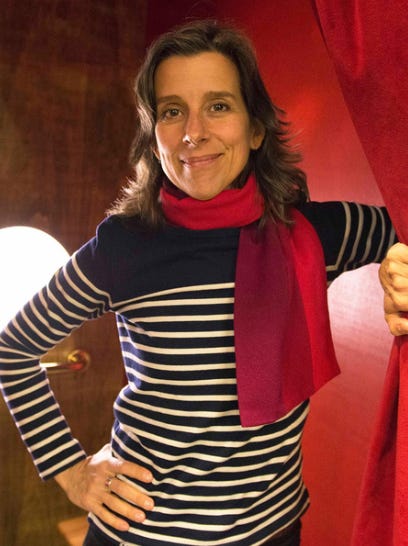
Nina Katchadourian at the Venice Biennale
Written By:

Nina Dahlblom
Exploring the essence of her art — and the Finnish influences woven into her multicultural identity.
APR 24, 2026
Interdisciplinary artist and educator Nina Katchadourian’s well known work may span continents, but its roots trace back to Finland. Summers spent on the Finnish archipelago shaped a way of seeing—attentive and curious —that continues to define her practice today, including her return to the Venice Biennale in May 2026.
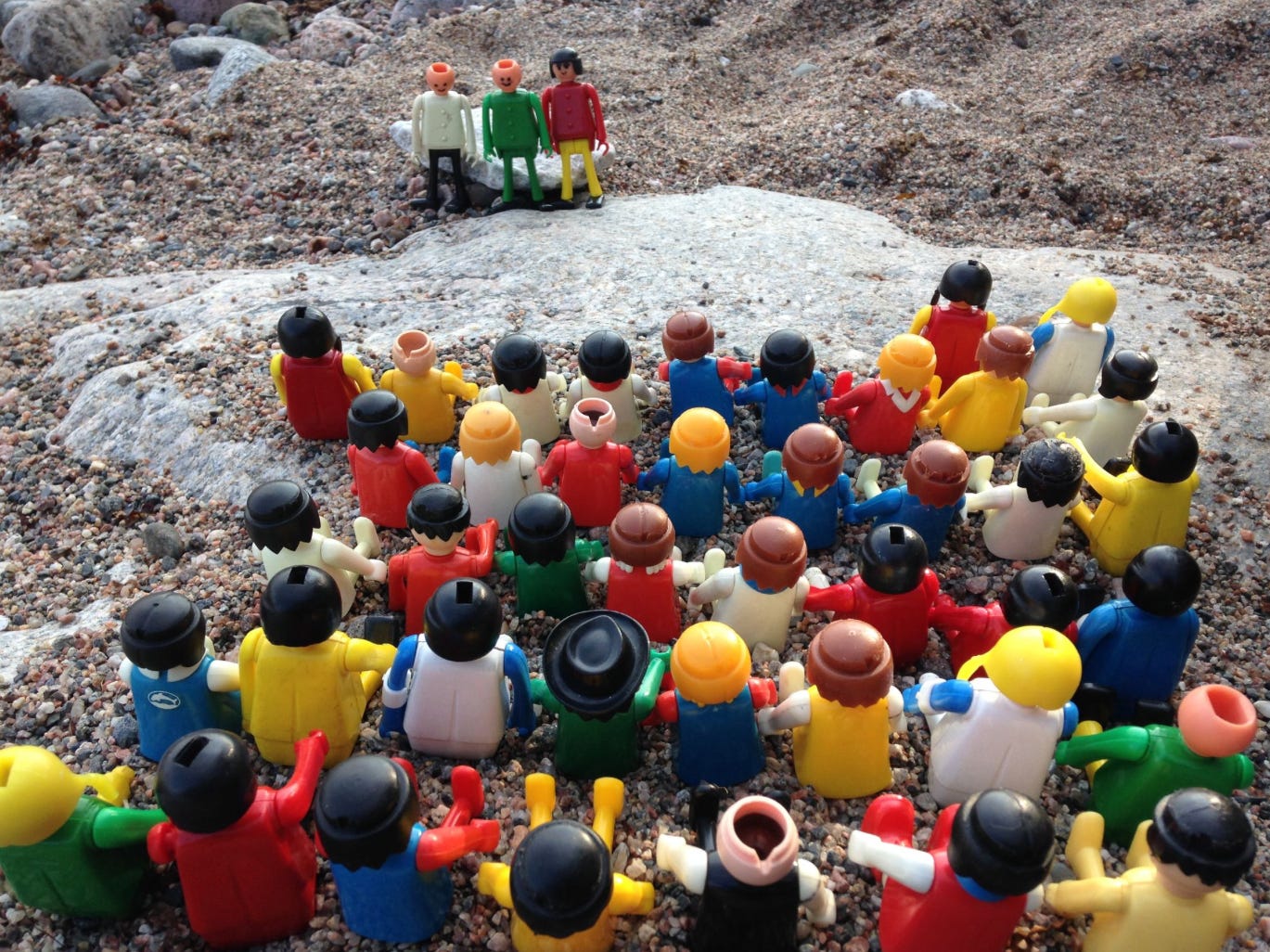
Production still, The Recarcassing Ceremony, 2016
Between Two Worlds
When I began exploring the work of Nina Katchadourian, I didn’t expect it to pull me in like a wave. It did. It was her art that made me wonder what drives her and what has made her what she has become, a curiosity driven artist.
She has worked across sculpture, photography, video, and sound, often approaching her subjects with a sharp sense of humor. There’s an intelligent irony in the way she reorders natural systems and everyday phenomena—often through deceptively simple ideas that leave a lasting impression.
Nina Katchadourian has lived from the beginning a life traveling across cultures. She was born in Stanford, California, to Herant, to her Turkey-born and Beirut-raised Armenian professor of psychiatry father and Stina, a Finnish Swedish journalist, literature translator and author mother. She grew up in Silicon Valley, went to Gunn High School in Palo Alto, but spent her summers on the island of Pörtö in the Borgå archipelago in Finland.
“You can’t choose your family. I got very lucky. I have a wonderful family—and they’ve also been willing to appear in my projects.”
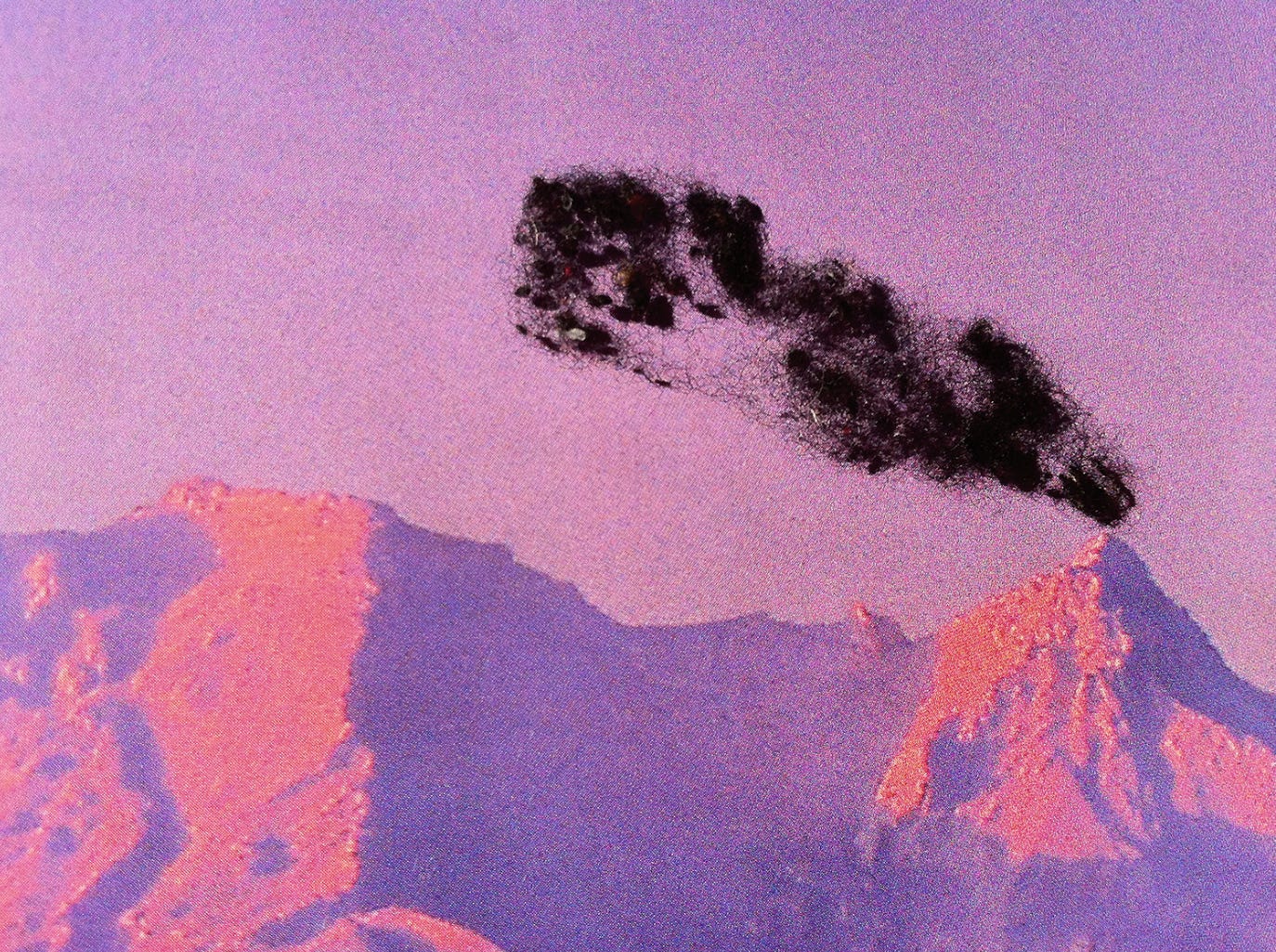
Pink Volcano, 2014, from the project “Seat Assignment” (2010-2021). Digital chromogenic print, 35.5 x 45.5 inches.
Katchadourian’s practice moves between Finland, the United States, and Europe, reflecting a layered cultural perspective. Her work embodies a sensitivity to place, memory, and environment, shaped by childhood experiences in the Finnish archipelago and a life lived across cultures.
Katchadourian’s experience of Finnishness is quite unique.
“I still speak Swedish with my mother. I don’t quite recognize her if she speaks to me in English—I connect through Swedish, through Finland Swedish. It becomes interesting when I travel to Sweden, because I don’t feel at home there at all. My home is Finland. Being Finland-Swedish is completely different from being Swedish.”
Summers in Finland created a soul landscape in her. “It was a rainy day in Berlin today… and suddenly the smell of the ground reminded me of summer in Finland.”
Her mind returns often to that landscape: a place of safety, familiarity, and sensory memory.
At the same time, she feels a strong connection to her Armenian heritage.
“The Armenian diaspora is very present in Berlin. While visiting Beirut has not been an option, the Armenian people look for connection anywhere they live. They always welcome you with open arms. It is not rare for someone to bring food to your doorstep. There’s a strong sense of belonging that comes through shared memory, through a food my grandmother used to cook, and other shared traditions.”
The Landscape of Pörtö and the Art of Observation
“My childhood landscape in Pörtö was completely different from California. The smooth granite, the archipelago, the water, the endless sky—they became part of my inner landscape. That is my home.”
There was no running water, no electricity in the archipelago.
“You might think there wouldn’t be much for a child to do, but our grandparents taught us how to observe. We watched ants working. My grandfather kept detailed logs of the birds nesting each year—where they nested, how many chicks were born. We also tracked flowers and learned all their names.”
“Maybe I learned to notice things that others overlooked.”
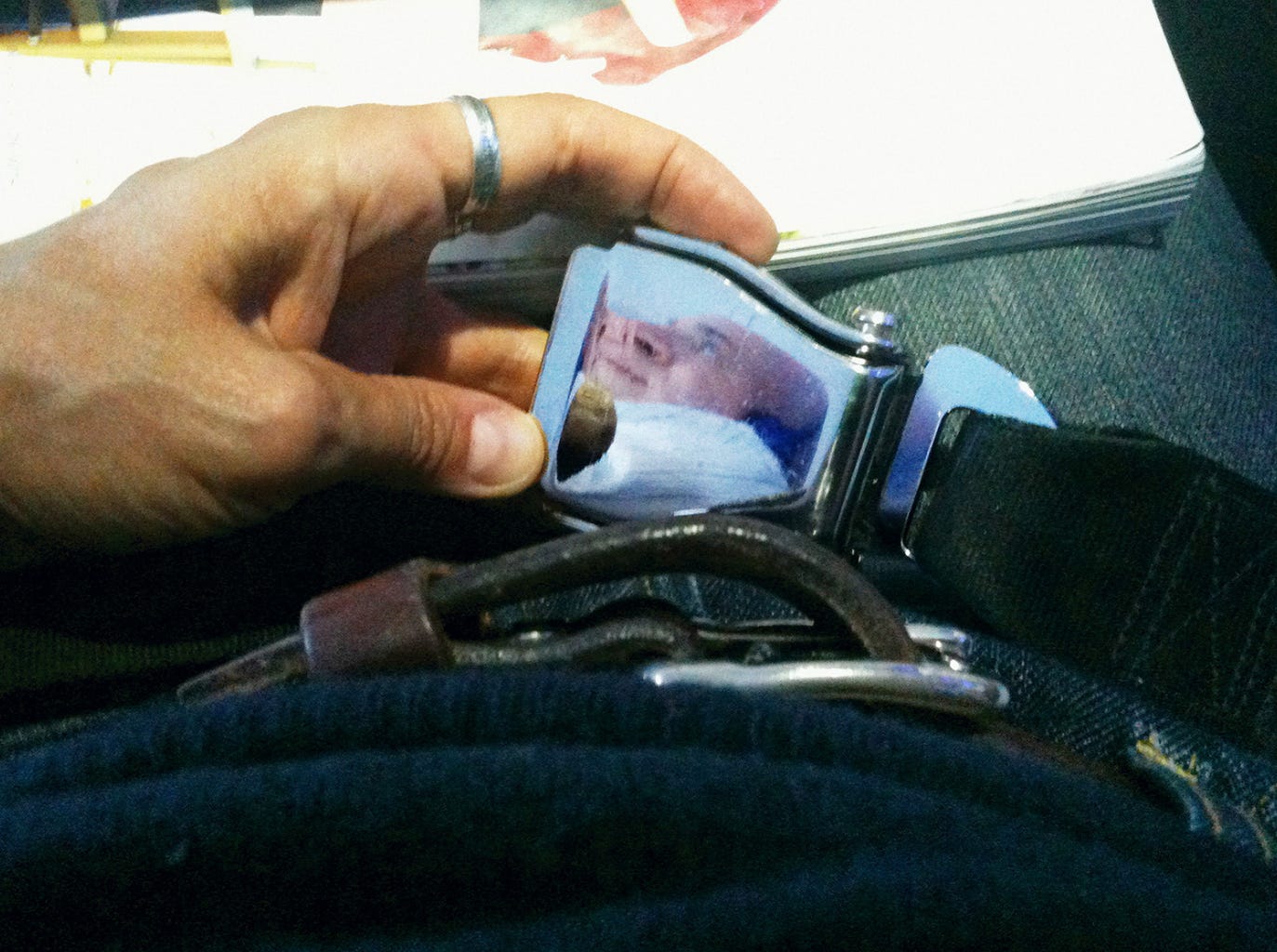
Bucklehead #1, 2012, from the project “Seat Assignment” (2010-2021). Digital chromogenic print, 15.25 x 19 inches.
Uncovering Hidden Insights
Becoming an artist was not obvious to her at first.
“I had a strange idea that artists lived privileged lives. I didn’t want that at all.”
Later in college she fell in love with visual arts.
“That is when art became a way of engaging with the world—a tool for inquiry.
I realized that as an artist, I have an enormous amount of freedom. I can allow myself open discussions with anyone, listen, observe, learn, and interpret.
Art is a kind of vehicle—with freedom. Without the same responsibilities as for example in journalism. It is like being a historian, researcher or an ethnographer. I see my role as drawing attention to things people might not normally notice.”
Katchadourian teaches at the Gallatin School of Individualized Study in New York.
“I often remind my students to take curiosity seriously.”
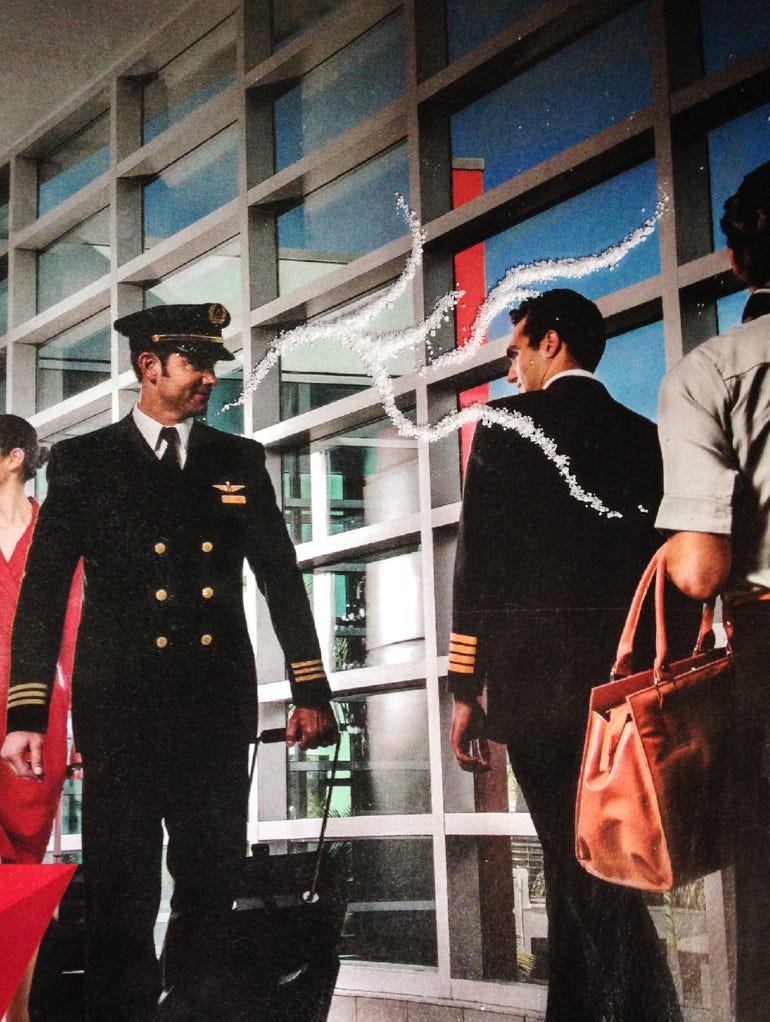
Prince Charming, 2015, from the project “Seat Assignment” (2010-2021). Digital chromogenic print, 24 x 19 inches.
Returning to the Venice Biennale
Katchadourian will return to Italy in 2026 upon invitation by curator Koyo Kouoh to participate in the 61st International Art Exhibition of the Venice Biennale, titled In Minor Keys.
The exhibition will take place from May 2026 through November 2026, bringing together artists from around the world at one of the most influential platforms in contemporary art.
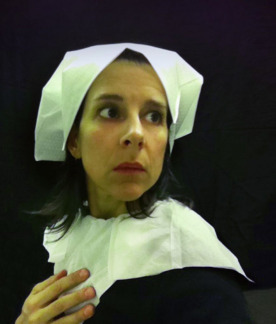
In Venice, Katchadourian will present works from her long-term project Seat Assignment (2010–2021), alongside The Recarcassing Ceremony (2016).
She previously participated in the Biennale Arte 2015, when her video Accent Elimination (2005) was included in the Armenian Pavilion, which received the Golden Lion for Best National Participation—one of the most prestigious honors in the art world.
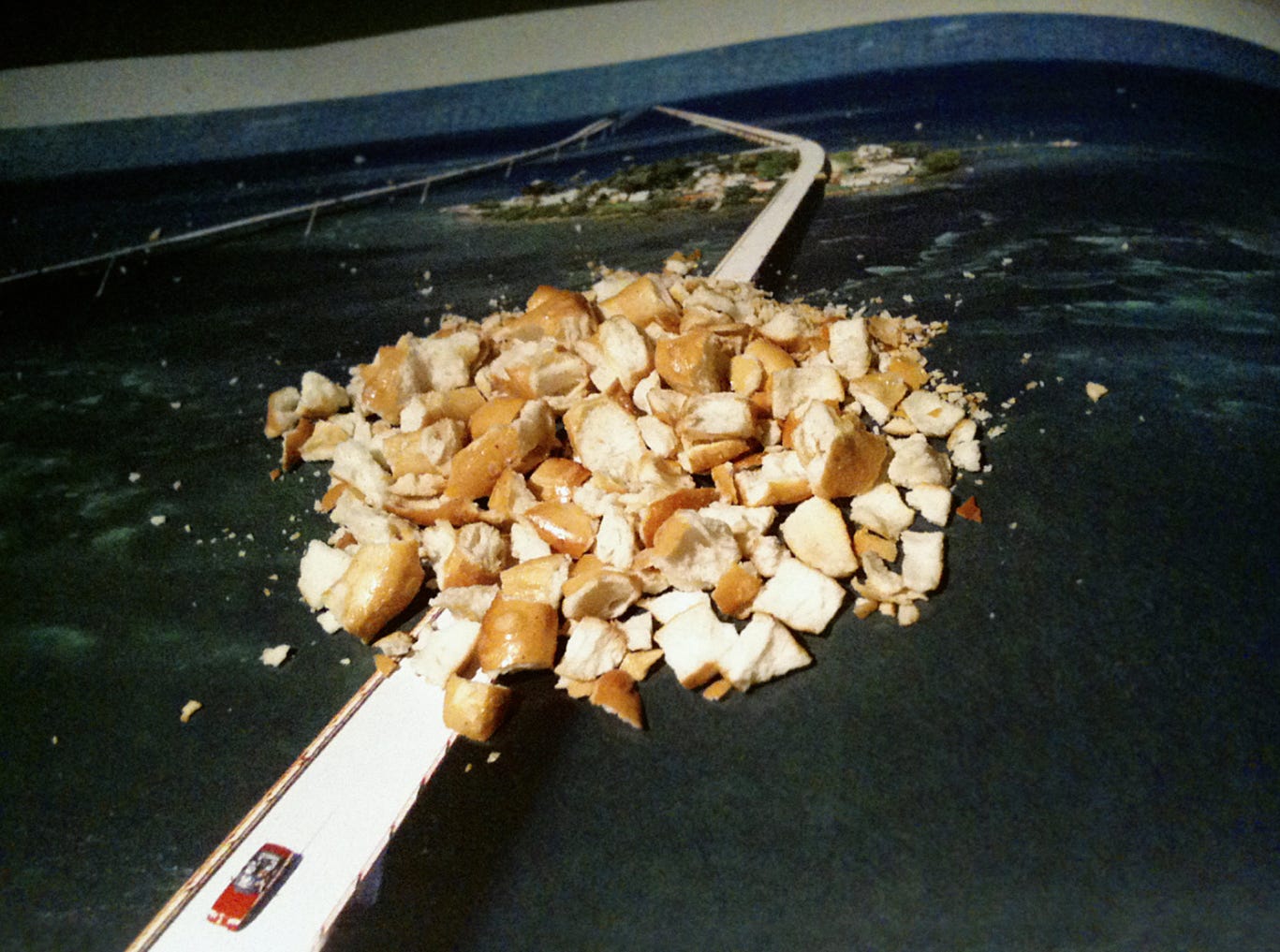
Pretzel Meteor, 2010, from the project “Seat Assignment” (2010-2021). Digital chromogenic print, 19 x 24 inches.
Seat Assignment — Turning Boredom and Constraints into Art
“I’m in a kind of turbulence right now finishing the exhibition logistics and the website and my book about Seat Assignment.”
In Seat Assignment, Katchadourian transforms the constraints of air travel into a creative environment and experiment. The airplane seat and lavatory becomes a studio, and materials come from whatever is available—magazines, seat belt buckles, napkins, lemon peels.
The project will be presented in Venice as a large-scale installation of 38 images on one massive wall, while a book compiling the work through 350 carefully chosen images will be published at the same time.
“It felt right to make it into a book. It allows people to spend more time with the images.”
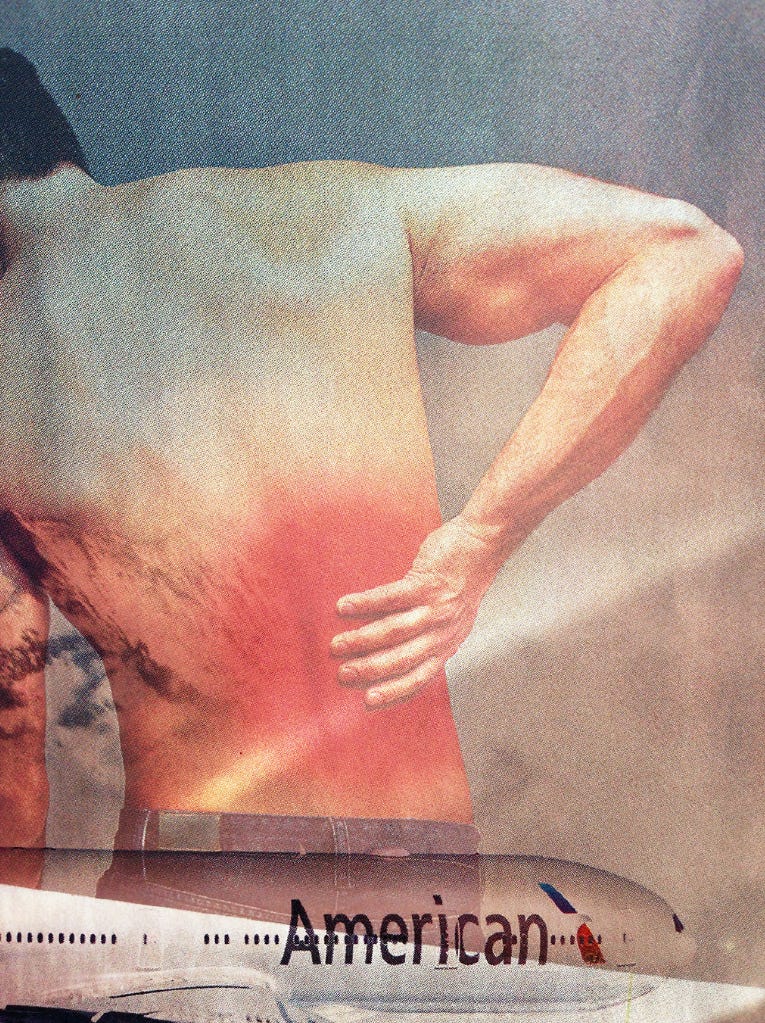
American Pain, 2014, from the project “Seat Assignment” (2010-2021), Digital chromogenic print, 24 x 19 inches.
Childhood Play and The Recarcassing Ceremony
Nina Katchadourian is an artist of rare individuality, whose work is both deeply personal, authentic and expansively versatile.
Before the interview, I watched the autobiographical video documentary The Recarcassing Ceremony. The piece is based on an authentic family cassette recording and real events from her childhood.
“My father didn’t have access to his own childhood memories. I think my parents understood their importance and recorded our lives.”
The story reveals a game that Katchadourian and her brother Kai created and played during their childhood summers on the island in Finland.
At the center of the work are two Playmobil figures, Matti and Steve with their clan of 25 characters in changing locations and events.
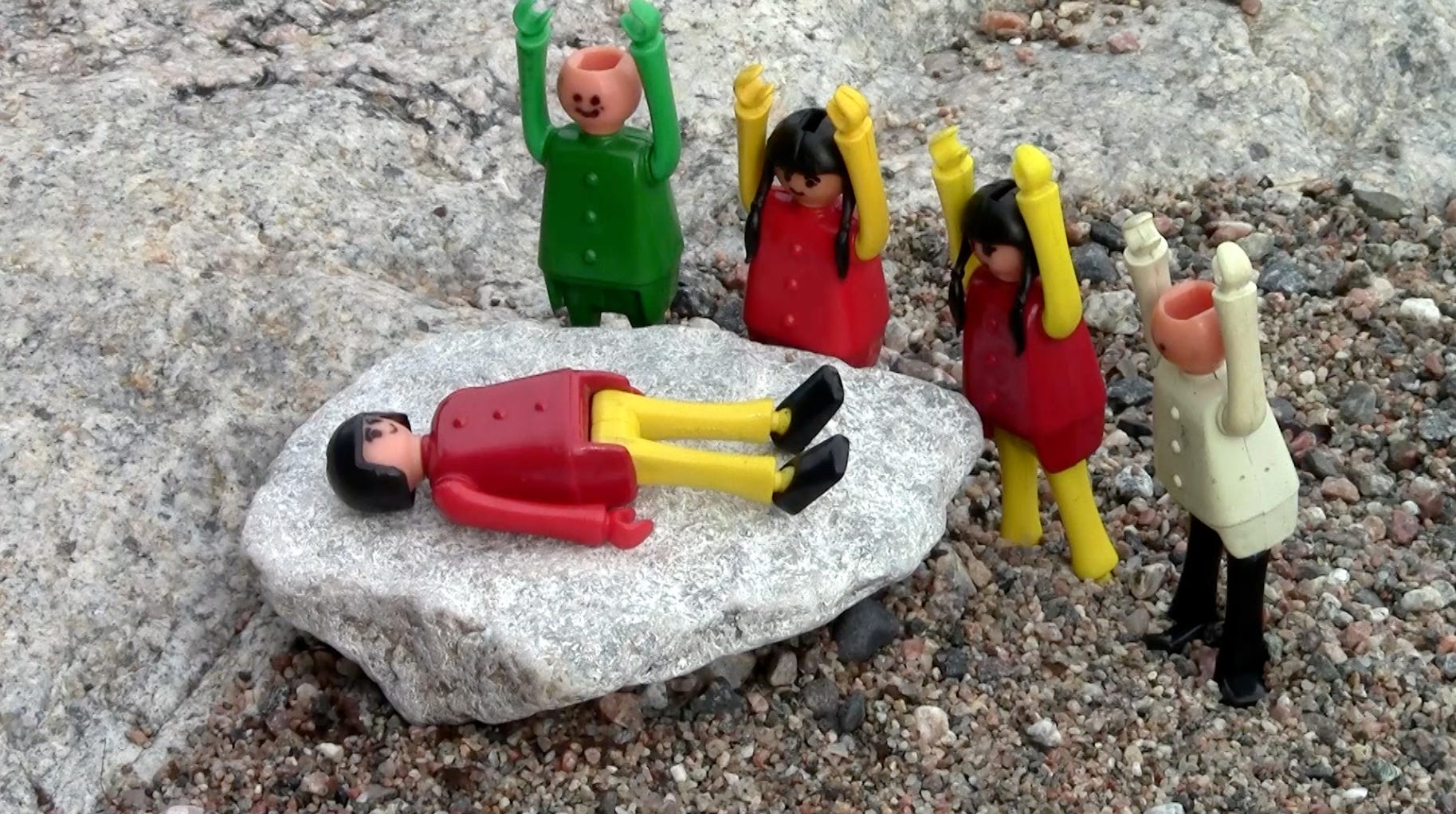
Recarcassing Ceremony video stills: Chanting over Matti
The concept behind The Recarcassing Ceremony was invented by the children themselves—an act of imagination that feels strikingly original, even by adult standards.
The work touches on childhood, growing up, loss, survival, and our instinct to make sense of life’s more difficult moments. At its core, it reflects how imagination and empathy can help us confront the things we would rather avoid.”
“I’m often asked about humor in my work. It’s a powerful tool—but many people come to me talking about the tears they experienced.”
Personally, seeing this work was deeply moving experience—and it stayed with me, long after watching. It opened a new door between my inner world and art.
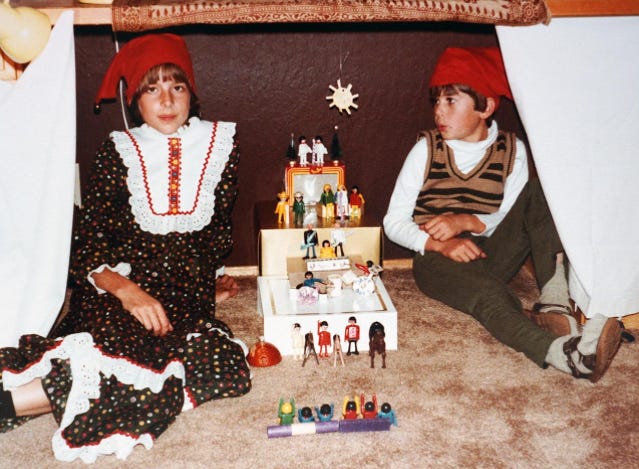
Katchadourian family album, detail, 1978
Meeting the Audience
Katchadourian says she closely observes her audience.
“Every exhibition is different. Every audience responds in its own way.”
The Venice exhibition is the result of extensive collaboration—galleries, logistics, and teams across cities including San Francisco and Berlin.
“It is great to see it all coming together. I hope many people come to say hi and experience my work.”
Through this interview, I realized how important audience feedback is to Katchadourian and how deeply she values seeing people react to her work.
As Katchadourian returns to Venice in 2026, her work carries with it decades of movement between places, disciplines, observation, personal experiences and ways of seeing.
From the quiet observation of a Finnish archipelago and Armenian generosity to encountering art lovers on the global stage of the Biennale, her practice reminds us that meaning often begins with curiosity and attention —paid to the smallest, most easily overlooked details and with exploration to build art with a story that resonates.
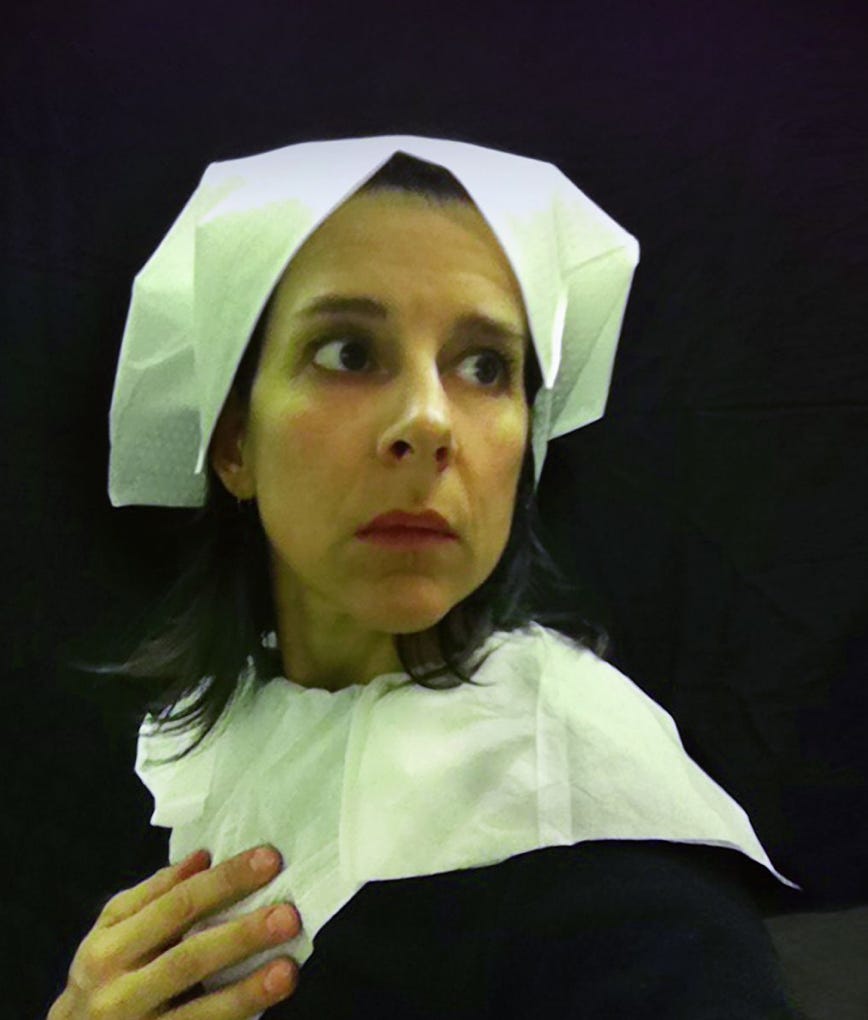
Lavatory Self-Portrait in the Flemish Style #12, 2012, from the project “Seat Assignment” (2010-2021). Digital chromogenic print, 12.75 x 10.75 inches.
Nina Katchadourian
- Born: 1968, Stanford, California, USA
- Background: Finnish-Swedish and Armenian
- Base: Berlin, Germany and Brooklyn, New York, USA
- Mediums: Photography, video, sculpture, sound, performance
- Themes: Observation, systems, identity, memory, improvisation within constraints
- Upcoming exhibition: In Minor Keys, Venice Biennale 2026
Notable Works
- Seat Assignment (2010–2021)
A long-running photographic series created in airplane lavatories using found materials. The work references art history—especially Flemish portraiture—while exploring identity, performance, and constraint. - The Recarcassing Ceremony (2016)
A video work based on childhood recordings and invented rituals, exploring memory, loss, and the human need to impose order on chaos. - Accent Elimination (2005)
A video examining language, identity, and assimilation through the process of accent training. Shown at the Venice Biennale in 2015. - Sorted Books (2001–ongoing)
A series in which book titles are rearranged into poetic sequences, creating new meanings from existing materials.BIENNALE ARTE 2026, 61ST INTERNATIONAL ART EXHIBITIONVENICE, 9.05 – 22.11 2026 https://www.labiennale.org/en/art/2026