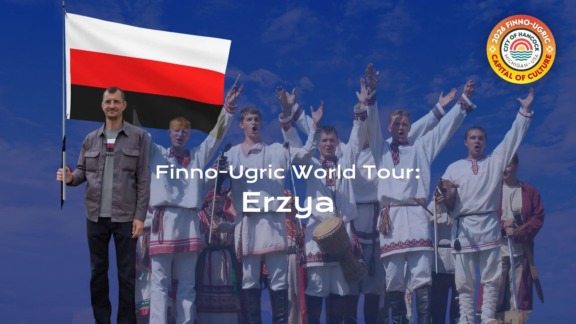
A Finno-Ugric World Tour: Erzya
Written By:

Gage "Touko" Keränen
By Gage ‘Touko’ Keränen
Originally published in the Finnish American Reporter, November 2026
What does it take to maintain an identity under pressure?
In June 2026, Vitaly Romashkin visited the city of Hancock for the first time, to join the festivities of the Finno-Ugric Capital of Culture. For Romashkin, the festival was a beacon of hope for the future–not only for the Finno-Ugric world, but also for his people, the Erzya.
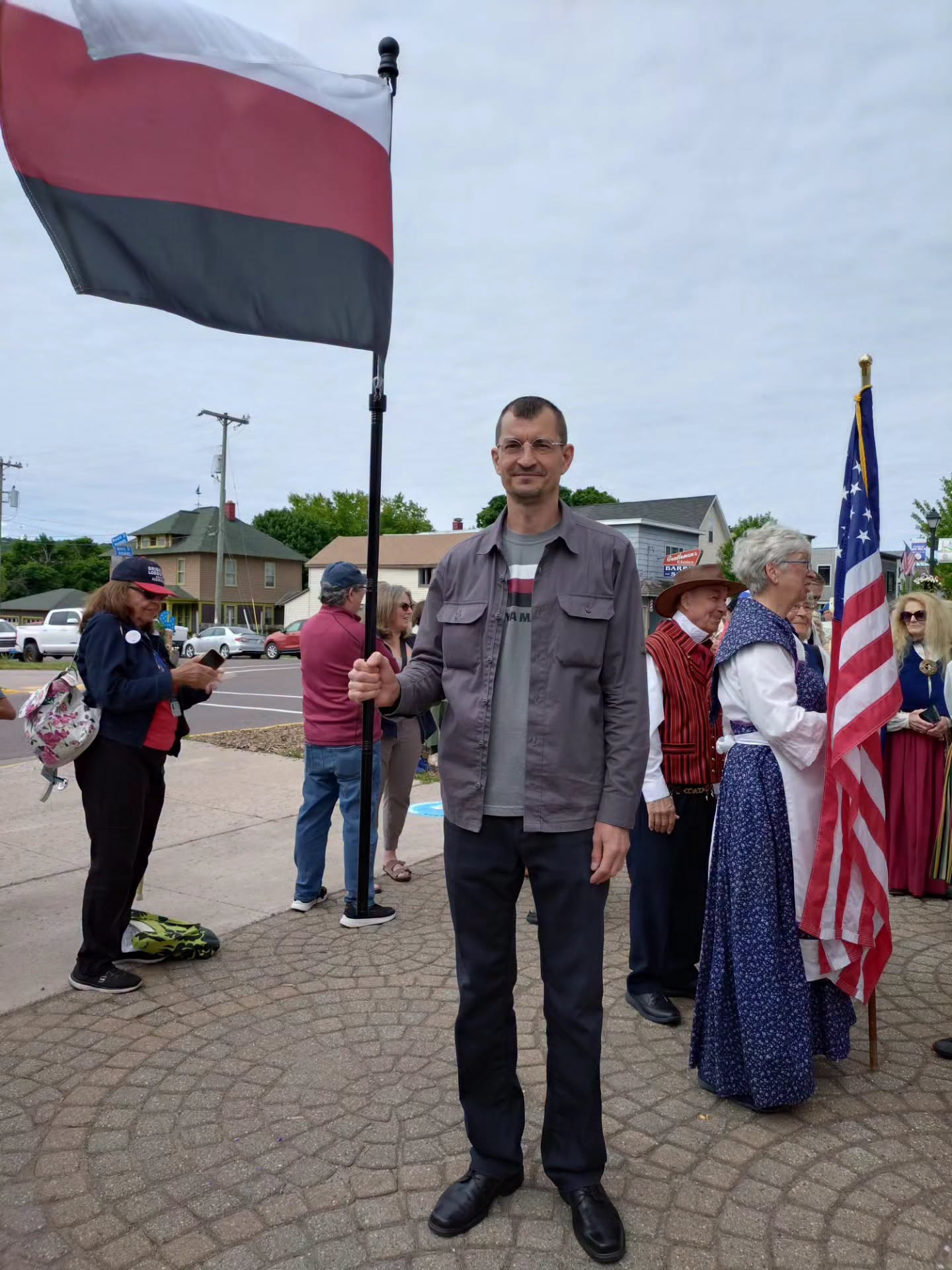
Centuries ago, the ancestors of Finnish people lived alongside the Volga River, far east of the Finland we know today. The descendants of these people spread to places such as Estonia, Finland, and Karelia, but some continue to live on this land to the present day.
The Erzya, cousins to Finns and Estonians, are indigenous to the central Volga region. Not to be confused with the Moksha (their closest Finno-Ugric relatives), the Erzya have their own unique customs and language, as well as a characteristic resilience that may be familiar to Finnish-Americans.
“The roots that feed the Finnish “sisu” are the very same roots that give life to the Erzya people on the banks of the Volga River. It is no coincidence that our neighbors say, “As stubborn as an Erzya,” said the Inyazor (chief elder of the Erzya), Syreś Boläeń, in a video congratulating Hancock. “The Finnish people were once under the rule of Moscow, just like our kindred brothers, the Estonians. But you achieved your freedom and your journey inspires us!”
Today, the Erzya homeland is within the Russian Federation, and its people have survived centuries of assimilation and suppression under Russian rule. Merely surviving, however, may not be enough to secure a future for their language and culture, as approximately half the Erzya population has disappeared from the census in the last 30 years.
For Romashkin and Boläeń, the way forward is to separate from Russia, just as Finland and Estonia did not so long ago. Both are members of the Free Nations League, an organization working to promote the independence movements of various captive nations within Russia.
“For me, living in Estonia and Finland was a very influential time because it gave me an opportunity to see what is possible for the nation,” said Romashkin, who grew up in the Erzya homeland. “We want not only to survive, but to thrive. For this, we need independence, and we need the Finno-Ugric movement.”
Unlike other Finno-Ugric peoples in Russia, such as the Komi and the Mari, there is no “Erzya Republic,” the Erzya people are spread out between multiple regions of Russia and no one republic is tasked with providing Erzya language education. Although the Erzya language is co-official in the Republic of Mordovia with Russian and Moksha, this policy is not enforced, and use of the language has been highly stigmatized.
Romashkin, while not fluent, still has knowledge of his language and is proud to be Erzya, thanks to the efforts of his father, Vladimir Romashkin (a.k.a. Yovlan Olo).
Vladimir Romashkin was a folklorist, researcher, and musician who recorded many ancient songs and stories during his travels to Erzya villages. He was a key figure in the revival of the Erzya culture and his folk music ensemble, Toorama, has become an international sensation, known for their restoration of the Erzya polyphonic singing tradition.
As a child, Romashkin often traveled with his father to villages and has witnessed the decline of the Erzya population since then. But where did these “disappeared” Erzya people go?
“They do not physically disappear. They lose their identity,” he explained.
Often, you can spot an Erzya based on their last name. Just as many Finns have last names ending in “-nen,” many Erzya have last names ending in “-shkin,” “-akin,” or “- ikin.”
Romaskhin has often met people with “very Erzya” last names, who say that they are Russian. But, when asked where their ancestors originate, they name Erzya regions.
Their families had relocated and, over time, lost their Erzya identity. These are the “disappeared” Erzya people.
For Romashkin, it is not too late for these lost Erzya to return.
“Being Erzya, first of all, is knowing that you are Erzya, because everything else can be restored. A language can be learned, tradition can be learned,” Romashkin said. “I believe that if we have an independent state, a lot of people will restore their identity and return, looking for their ancestry, for roots.”
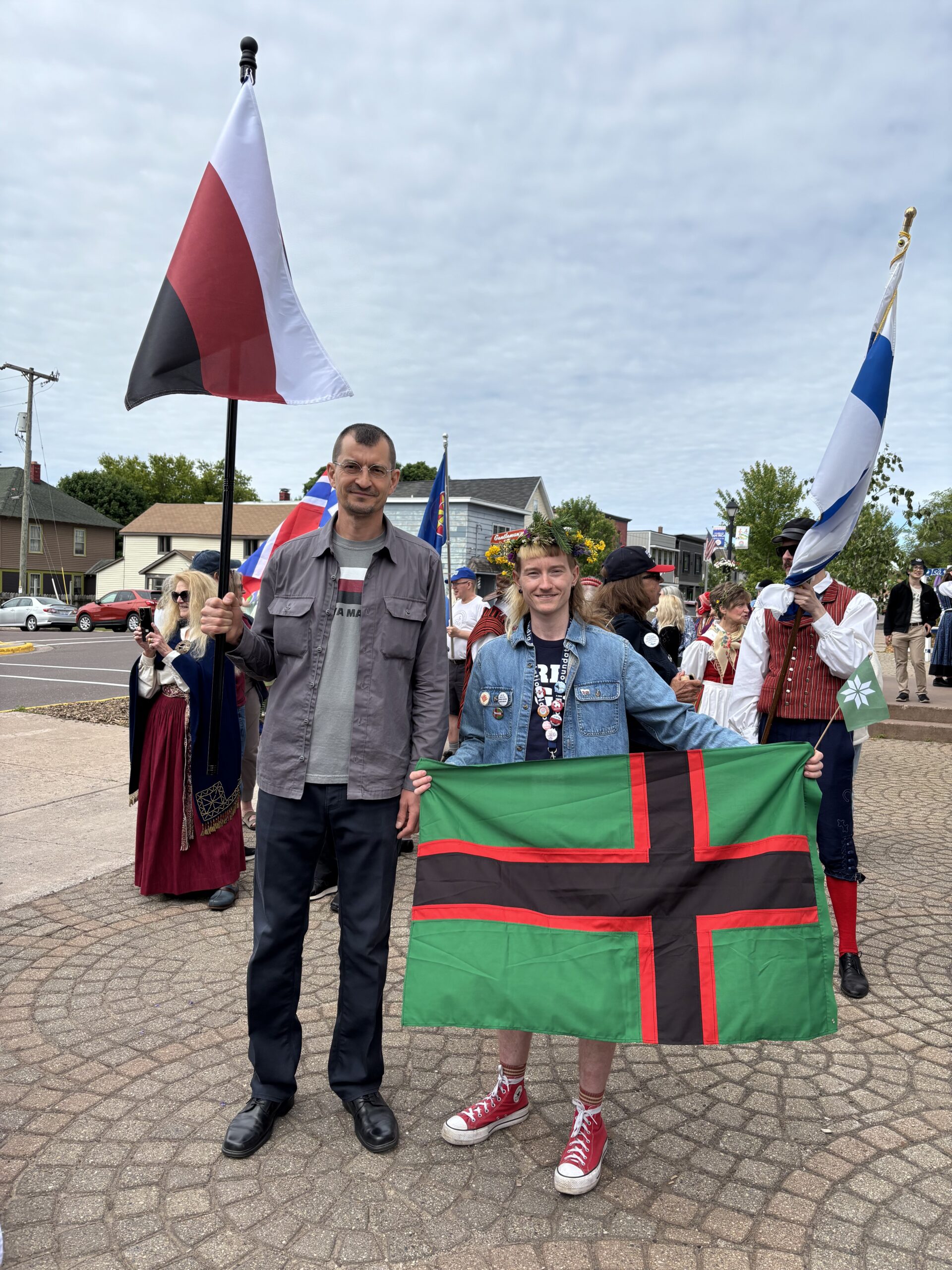
A similar phenomenon can be seen in the Finnish-American sphere. Many of us also return, seeking answers and picking up the pieces.
The same sisu-like stubbornness that carried our kindred people through the centuries is what accompanied our Finnish ancestors across an ocean to North America, and–for as long as we know our roots–it cannot be taken from us.
It is often said among Erzya: “Vejsë, erźat, vijevťano,” or “together, Erzya are strong.”
Imagine, if the approximate 25 million Finno-Ugric people in this world said, “Together, Finno-Ugrians are strong,” what could be accomplished then?
Interested to learn more about the Erzya? Read more at the Erzyan Mastor website: mastor.erzja.info.
Want to explore the 2026 Capital of Culture in Hancock, Michigan, and its unique Finnish-American atmosphere? To learn more or plan a trip, visit FinlandiaFoundation.org/Hancock2026. See you there! Nähdään pian!