Fieldwork on the Mesabi Iron Range by Dr. Mirva Johnson
Written By:

Finlandia Foundation
Driving back from a week of fieldwork in northern Minnesota on the Mesabi Iron Range, part of the route took me down Minnesota’s Highway number 7. I couldn’t help but smile as the chorus of Bobby Aro’s famous tune from 1957 came to mind: “In my shack by the swamp on the highway number 7.” A portion of that highway was renamed to be the Bobby Aro Memorial Highway in 2008, in honor of the well-loved radio DJ and singer from the area who combined Finnish and English in many of his humorous tunes. I was struck by how place and landscape contribute to a better understanding of points of cultural significance for Finnish American communities, especially in the Upper Midwest. A lot of nuance is added by familiarity with Finnish American musical legends like Bobby Aro or the Oulu HotShots and knowing a handful of Finglish words like mojakka, korsteeni, and farmi. Some of those words are derived from the predominantly Ostrobothnian dialects spoken by immigrants to the region around the turn of the 20th century, others developing following decades of contact with English in North America. Many of these things come up during oral history interviews.
Oral histories are one of many sources researchers use to better understand past events and moments in time. Each of the individuals I interviewed in northern Minnesota shared rich stories of life in the region. Two were raised in Laestadian families. One grew up in a boarding house owned by her grandparents and later ensured the building’s preservation at the Minnesota Discovery Center. Two grew up on the Fond du Lac reservation, Nagaajiwanaang in the Ojibwe language. Two others immigrated from Finland themselves following World War II. A couple had relatives that owned or helped operate local co-op stores. They all shared memories of how Finnish was used and spoken in their families and communities. One recalled her Finnish language skills coming in handy when she had to break up a fight at a nursing home between two men shouting at each other in Finnish. They’d been dumbstruck when she was able to join the conversation. I even happened to interview the grandmother of one of my friends from northern Virginia. I realized the connection only a couple days before the interview and we connected over the coincidence that we had both attended his wedding in 2019 over a thousand miles away.
Virginia, Minnesota
On the first day of the trip, I made my way to Kaleva Hall in Virginia, Minnesota. I was immediately struck by how well the building had been maintained since its construction in the early 1900s. I was given a tour by two women, each named Eila, walking me through their meeting rooms and great hall. Eila Ivonen shared many of the scrapbooks she’d created, filled with images, event posters and flyers, and newspaper clippings of various events the hall has hosted over the years. The Knights of Kaleva are a fraternal organization first founded in 1898 with lodges established in states across the country. The Ladies of Kaleva were established a few years later to provide women with the same opportunity for creating and preserving community among Finns in America. While membership in the Knights and Ladies of Kaleva has declined over the last few decades, the local chapter of the Ladies of Kaleva is still very active. They recently hosted one of their most successful bake sale fundraisers yet.
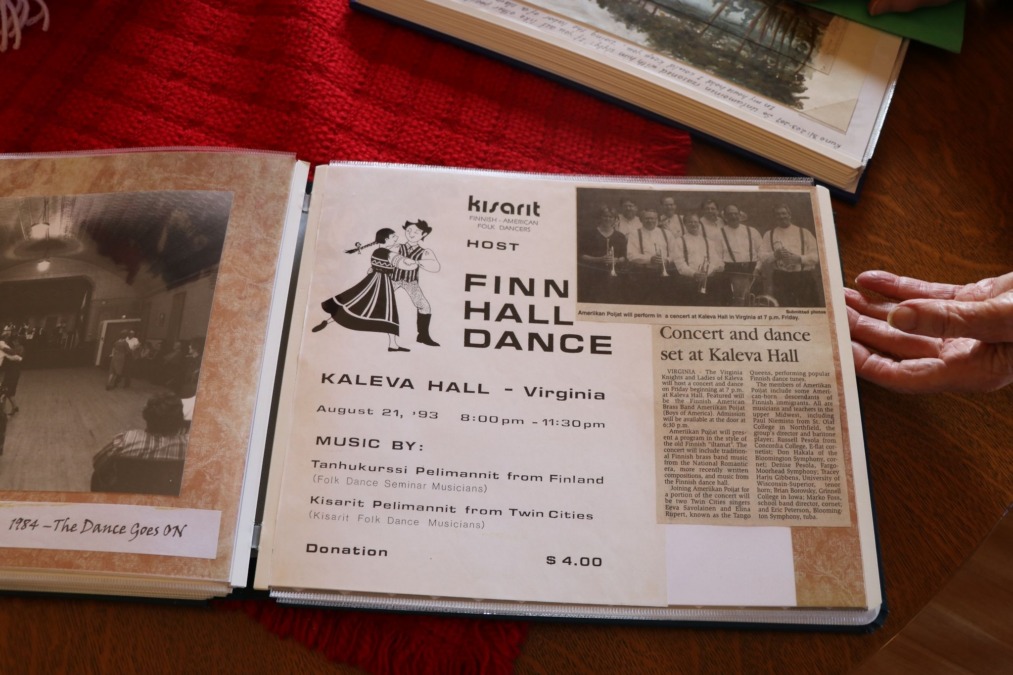
Scrapbooks record different events hosted at Kaleva Hall throughout the years. Plays and musical events, including dances, have been popular over time. The Ladies of Kaleva hosted one of their most successful bake sales this winter.
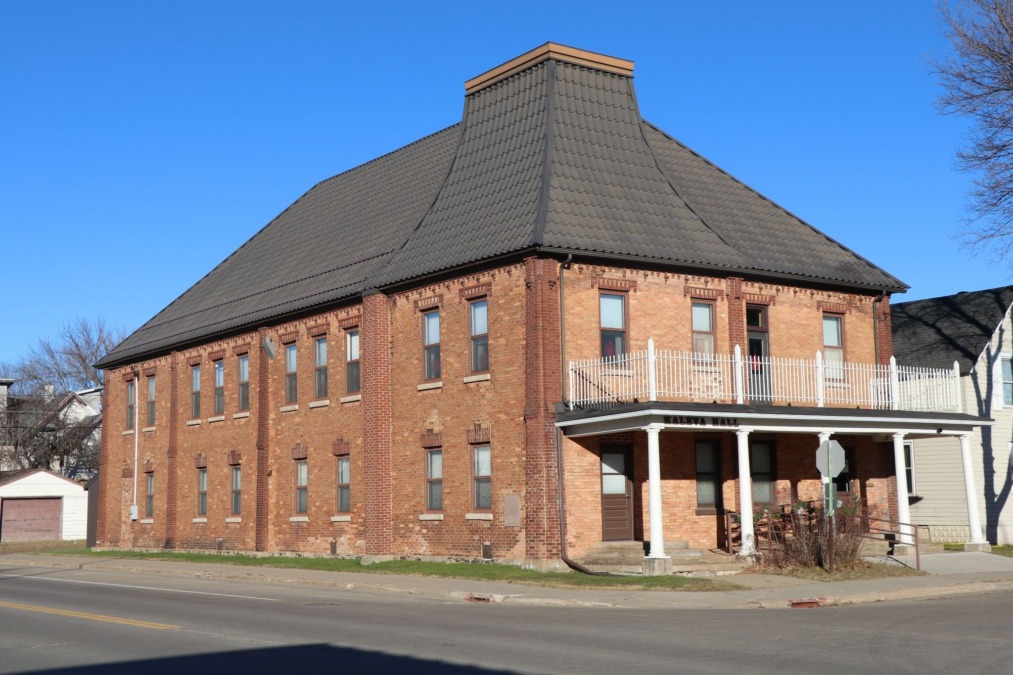
Kaleva Hall in Virginia, Minnesota, was first constructed in 1906.
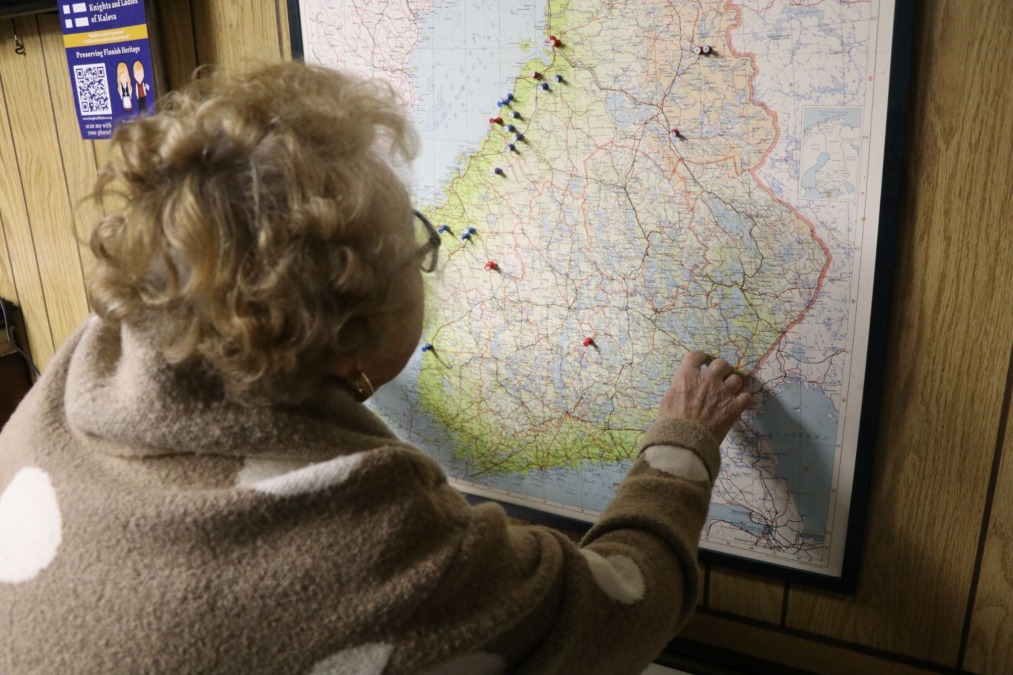
Eila Isaacson looks for Kuopio on a map of Finland to show where she was born.
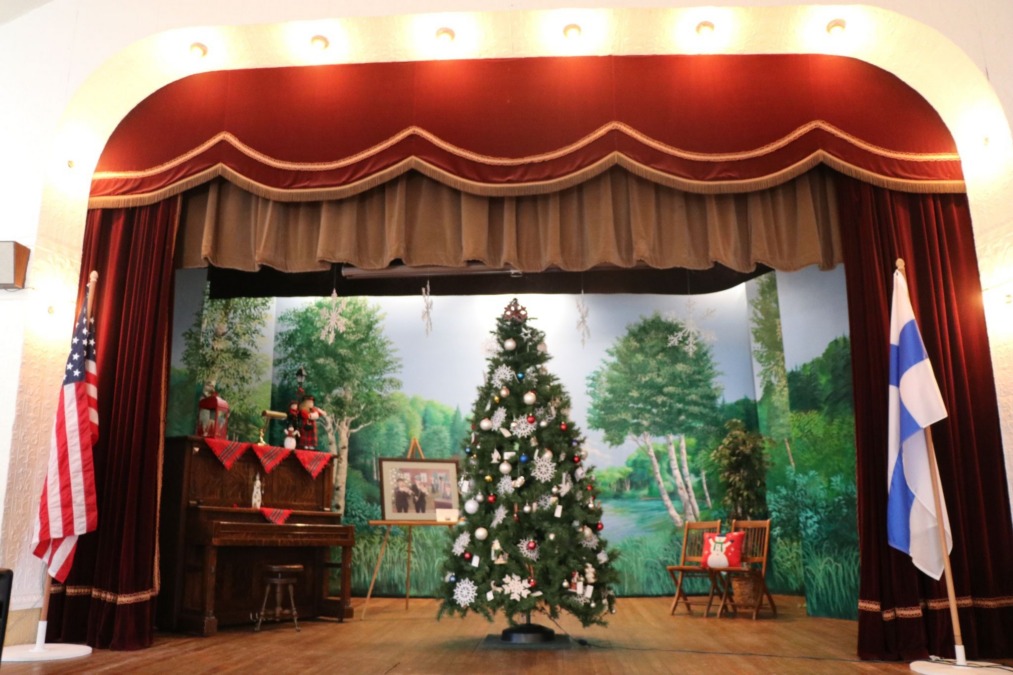
The second floor of Kaleva hall has a stage for performances.
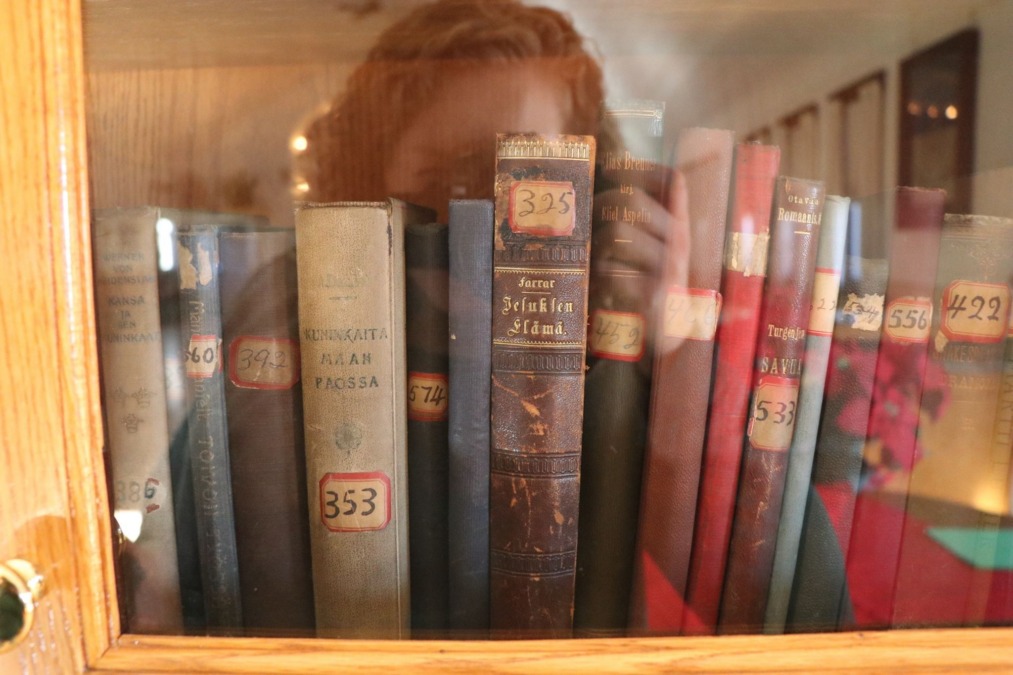
A small lending library was established out of Kaleva Hall. Eila Ivonen led the application for a grant to secure bookcases in which to preserve the books: some written in Finnish, others in English.
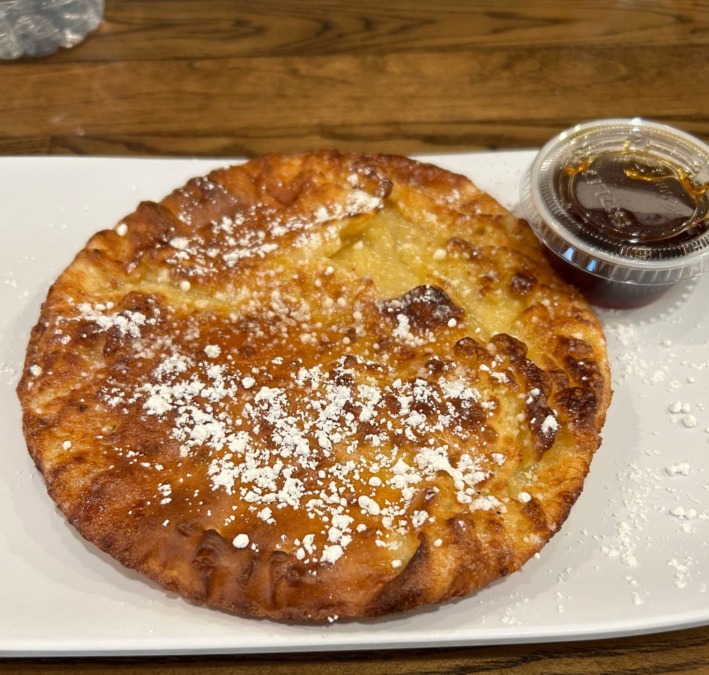
The ways that people built community and adapted language and traditions 100 years ago can tell us about the bigger picture of how change happens over time, and what resources communities need to best support their families and one another. Especially interesting is how the meaning of traditions can change over time, from something ethnic to something local. On the way out of town, I stopped for dinner at Kunnari’s kitchen and coffeehouse. I did a double take when I read the daily special was krupsua (also known as kropsu, a dialect word used mostly in western Finland and also among many Finnish Americans). No explanation listed on the menu, and no other overt symbols or connections to Finnish or Finnish American heritage in the restaurant. A piece of food culture that was totally local. When I asked them what it was, I was told it was a kind of Finnish pancake. And it was delicious.
Hibbing, Minnesota
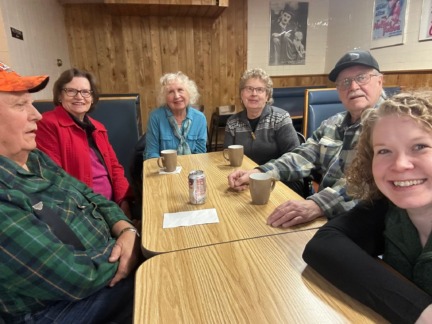
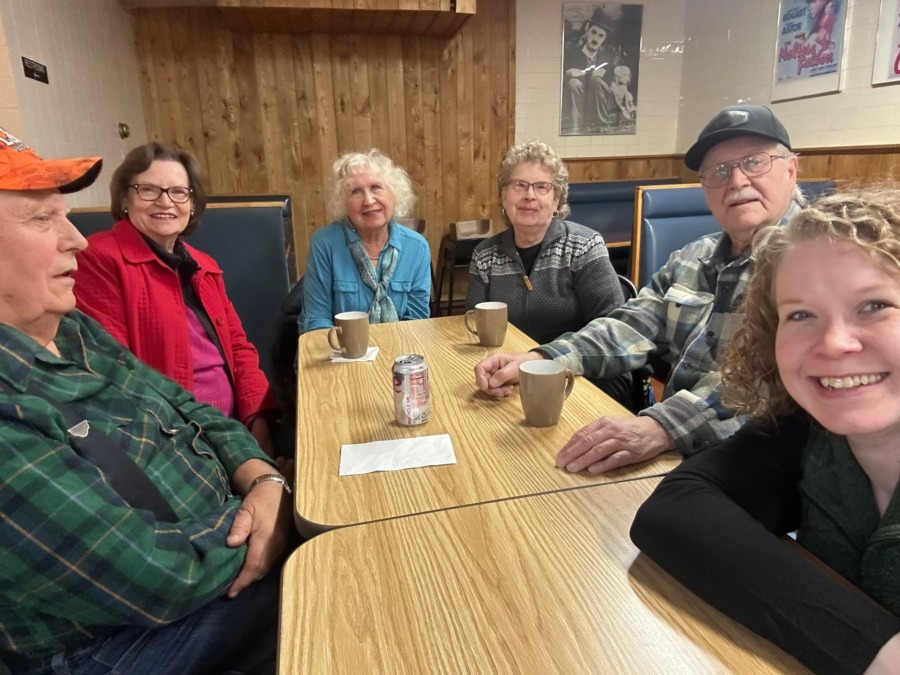
A couple days later, I chatted with a Finnish conversation group that meets monthly at a cafe in Hibbing, MN to speak in Finnish. The majority of Finnish Americans I meet lament on how few people speak Finnish nowadays. It was a refreshing surprise to join a regular meeting dedicated to speaking in Finnish. One individual spoke Finnish with a striking Ostrobothnian dialect, despite traveling to Finland only twice in their life. The group told me about where many Finns had lived in the area, name changes of various towns, and generally what it was like to grow up in the area. Some had moved back after years of working elsewhere. The conversation and group again reminded me of the connection between language, place, and traditions and the choices we make in what matters to us and what we carry forward in our own lives and with our friends and families.
Why do oral history interviews matter?
The fieldwork trip and conversations I shared offer a snapshot of life in the region, and especially of both endurance and transformation within the Finnish American community. People shared the things and values that mattered to them and the role they had played in helping to shape their community. Offers of pulla and coffee, suggestions of people to interview, recollections of the various Finnish practices of relatives, and memories of how community was created and maintained paint a vivid picture of life in the region. They also offer valuable accounts of why traditions were carried forward and how they were adapted.
I’ve heard many ex-patriate Finns comment on the instant connection they feel with someone they meet outside Finland who understands the significance of pulla, sauna, or Fazerin sininen. Many people I’ve interviewed (whether an immigrant themselves or a 3rd generation descendant) have said that it is important to them to pass Finnish heritage on to the next generation. And most people have ways they do this in their day to day lives: baking pulla, placing straw decorations on the Christmas tree, speaking Finnish, or taking sauna on Saturdays. In addition to creating a record for researchers, oral history interviews create a record for families and communities, offering insight into how pulla was made locally or how particular buildings were constructed. As part of the Oral History Project, I am curating an online resource including a “how to” guide for doing your own interviews with family members, advice for recording audio, and guidelines for if you would like the files to be preserved.
We launched the oral history project at FinnFest 2025, collecting 21 interviews over 3 days in Duluth. I love doing this work. I love to learn how a person’s experiences and communities have shaped them, and the role of Finnish language and culture in how they make meaning in their lives. When you are raised in a minority language or culture in the setting of a different majority language and cultural group, you inherently have a different understanding of that minority culture compared to those in a country where it is the majority. You may learn what it means to be Finnish from the values instilled by your family, the stories told by relatives, and hopefully from experiences in Finland if you are fortunate enough to travel there. Those whose families immigrated from Finland generations ago have played a role in actively forming a unique Finnish American culture. The way Finnish American language and culture has developed across North America and changed over time is a story that needs to be documented and preserved, through as many voices and sources as possible.
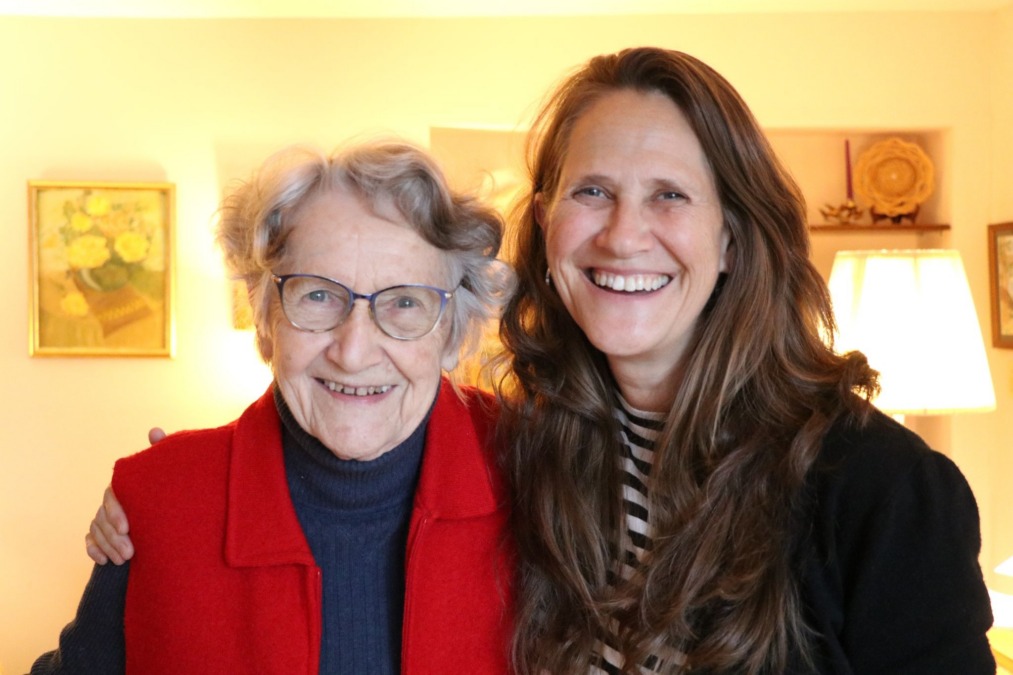
Edythe Krummi Karlstrand (98 years old) and Pastor Emily Rova-Hegener have remained friends for many years.