Digitizing the Past: A New Chapter for the FAHC Archive
Written By:

Finlandia Foundation
By J. Chopp, Archivist at the Finnish American Heritage Center Historical Archive
The FAHC Archive is embarking on an exciting new project to begin digitizing the collections. It’s been a complex process of weighing the pros and cons of purchasing new equipment and doing the work in-house or contracting with knowledgeable and vetted vendors who specialize in such work. We are now at the point that the exhaustive prep work is going to start bearing fruit in the coming months as we launch a pilot project.
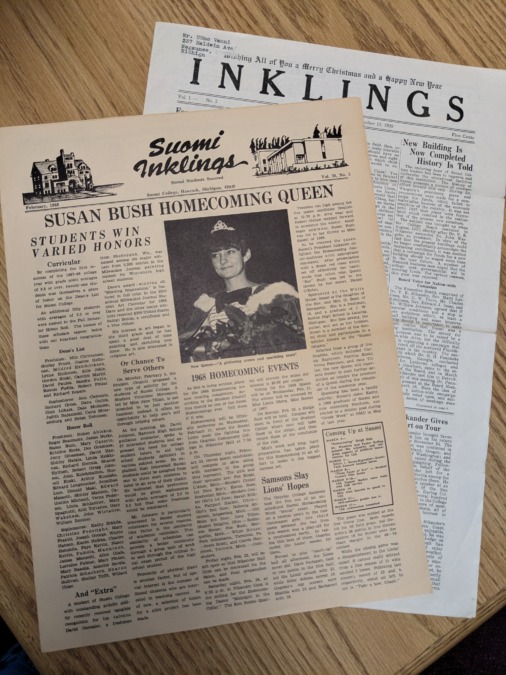
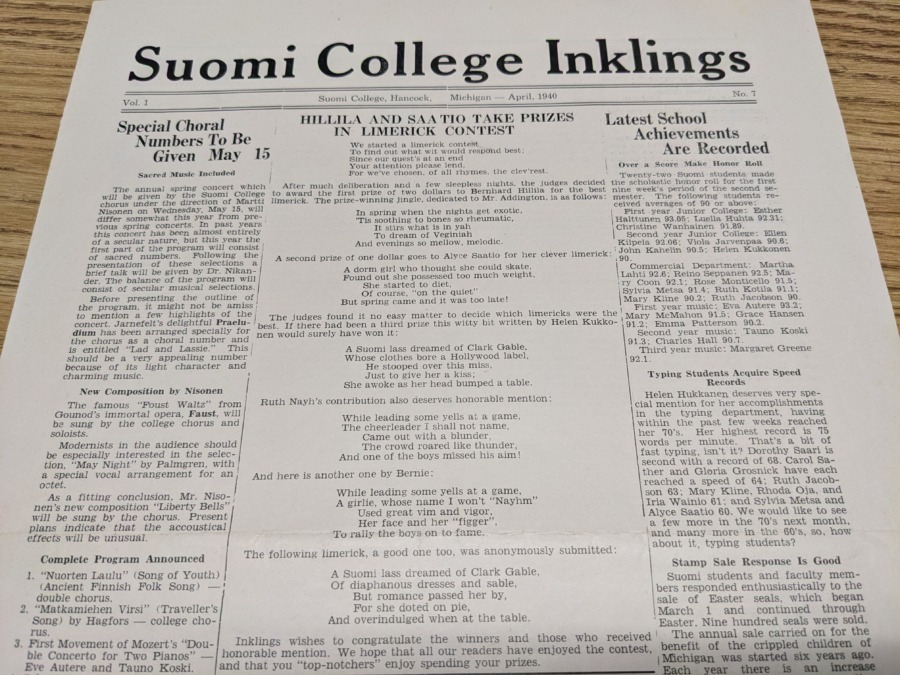
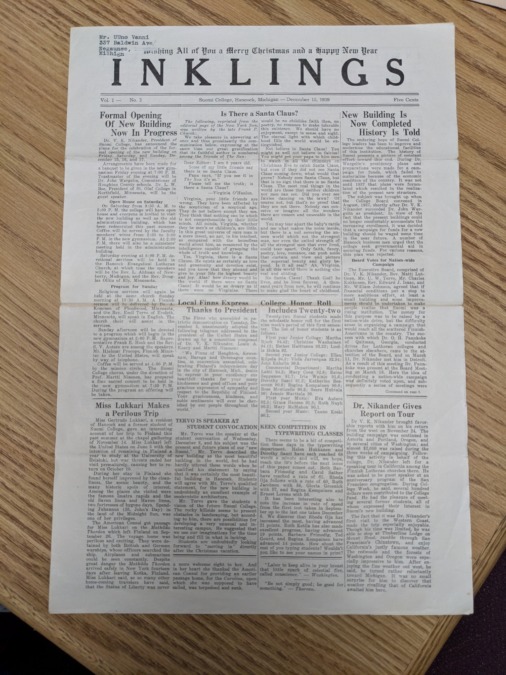
The most enjoyable step so far has been identifying the first subsets of the archive collection to be digitized. After much deliberation, we selected a combination of some of our oldest records from the founding of the Suomi Synod and Suomi College in the 1890s that are in danger from fading and brittle paper, as well as more recent materials related to those entities that are accessed often by researchers. The latter category includes the yearbooks from both the school and the Synod, as well as course catalogs, campus publications, and our entire run of Suomi Inklings, the long-running student newspaper.
I have never found a definitive source in the records from Suomi College that lays out exactly how long Suomi Inklings was published on campus. The first edition (Vol 1, No 1) was published in October 1939. The most recent we have is dated February 1972 but gives no indication if that was the final one. If there is an alum out there who knows the answer to that question, I would be grateful if you let me know.
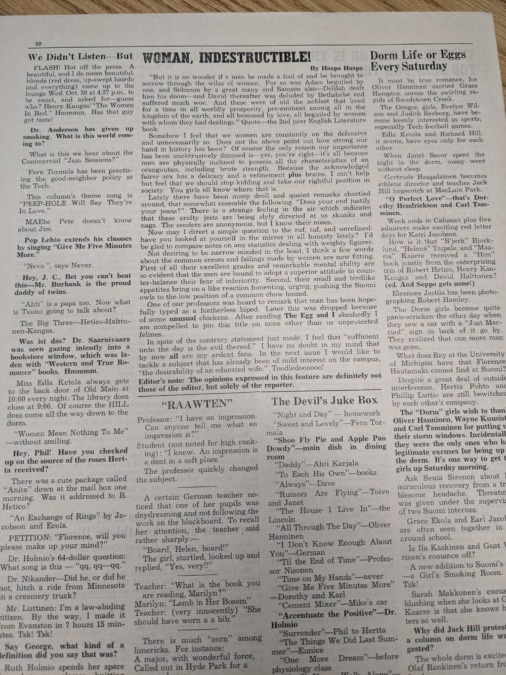
There are also gaps within years that we know the paper was published. For example, we only have three editions from 1941-1942. It is possible that a full year wasn’t produced due to staffing, the lingering effects of the Depression, or the looming war in Europe. Or perhaps previous archive staff couldn’t collect copies for the rest of that time. I implore readers to reach out if they have any back issues from any year to see if they might help us fill in some gaps.
While the Inklings contains a lot of whimsical columns and inside jokes tied to the time periods in which it was produced, it also provides a wealth of information that helps the archive staff identify people and events in the many, MANY uncatalogued and unidentified photographs from the early years of the school’s history. Even more reason to ensure we have a full run, if possible.