From the Archive: Finnish Women for the Vote: Aino Uksila and the Fight for Suffrage
Written By:

Finlandia Foundation
By J. Chopp, Archivist, Finnish American Heritage Center Historical Archive
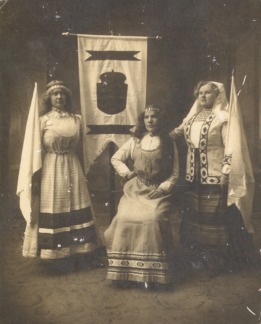
While scouring the archive collections for materials with which we could commemorate contributions by Finnish-American women, there was a single photo depicting three women in folk dresses, posed dramatically around a large banner, categorized under the subject heading of, “Women’s Rights.”
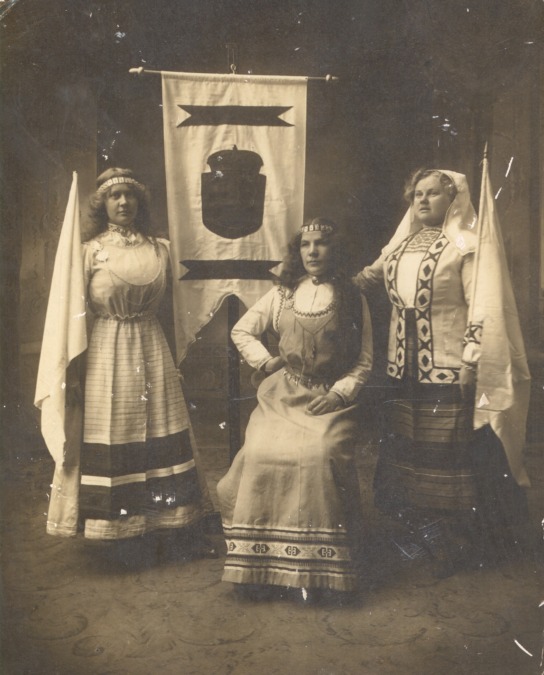
This photo was a mystery at first. Two of the women are identified on the back of the photo as Olga Koski and Aino Uksila. The name of the woman in the middle is unknown. The handwritten text on the back states these women represented Finnish women voters and participated with American suffragists in a parade for women’s rights. The story we could piece together about how Finnish immigrant women ended up marching for suffrage in the United States is quite fascinating. This is the story of one of these inspirational women.
Aino Mary Hirvonen (on the right), a teacher by training, left Finland for Boston with a goal to improve her homemaking skills and then return to Finland. As so often happens, life didn’t go as planned. She ended up marrying her Finnish fiancée Armas Uksila in America in 1910 and become greatly involved in the Ladies of Kaleva organization and the Imatra Society in New York.
Armas, a journalist, had contacts in the Votes for Women office in New York and found they were in desperate need of Finnish representatives to march in the women’s rights parade (women in Finland had already won the right to vote in 1906) to be held in NYC in May 1912. With only two days before the event, Armas said he could only promise one Finnish woman to attend the parade. Aino was surprised and terrified when she heard she had been volunteered to be one of the paraders.
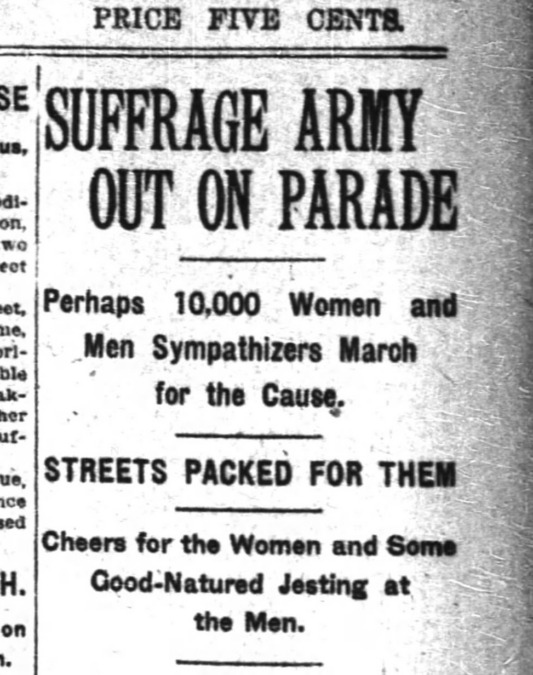
Along with the photograph, the FAHC Archive also has a copy of Aino’s unpublished memoirs, “Kuusikymmentä vuotta Amerikassa (Sixty Years in America),” in which she relates participating with several other Finnish immigrant women in the parade on Fifth Avenue in New York City, an event that drew over ten thousand and garnered national headlines. In spite of her initial reluctance, it proved to be a dress rehearsal for what was to come a year later.
Once it seemed certain that Woodrow Wilson would win the presidency, suffrage organizers began planning a massive parade in Washington, D.C. on March 3, 1913, the day before Wilson’s inauguration, to call attention to the cause. Again, organizers hoped that as many Finnish women as possible would march in solidarity, the purpose of which was to show a large crowd of women who already had the vote in their home country.
The Finnish American newspaper, New Yorkin Uutiset ran announcements encouraging women to attend an organizational meeting at Imatra Hall in Brooklyn. Aino remembered the building was full and according to her, the result was that the Finnish contingent in the parade was the largest and most photographed of all the different nationalities that were represented.
Of the Washington parade she wrote:
Right after we arrived to the station, we saw a big Votes for Women booth. We told them we were from Finland, and one of the ladies introduced herself as a congressman’s wife. She said she would take us to a congress meeting to hear the president’s last speech.
After we arrived at the women’s headquarters, our escort stood on the nearest table and yelled loudly: ‘The Finns have arrived!’ Women had been informed about our arrival from the station, but regardless of that everyone became joyful and wanted to speak with us.
In the morning, we were dressed for the parade already when our escort arrived. She drove down Pennsylvania Avenue to an open square. All the floats which had been prepared for the parade were there. The first float was reserved for Mrs. Anna Shaw and Mrs. Carrie Chapman Catt [well-known women’s rights activists]. The next one was for us. There was a flagpole at the back of the float and from the top of the flagpole hung a big white standard with a colorful coat of arms of Finland. Words SUOMI and FINLAND were written in big letters above the coat of arms. The float was filled with tiny spruce trees. On the left side of the float sat a journalist and we stood on both sides of the standard with big Finnish flags. White cloth hung in front of the float with the text ‘FINNISH WOMEN WERE THE FIRST EUROPEAN TO VOTE’. The parade lasted six hours. We had over four and half hours to sit and watch it. It was certainly much grander than the ones held in New York.
We returned to New York by late night train tired, but satisfied about our journey. Next week we went to Ladies of Kaleva meeting to tell everyone about our trip. Women were all interested and grateful that we had sacrificed our time, money, and strength to honor our homeland.
When we study history, we often look at it in the broadest of terms and forget about the individuals who give life to movements and struggles. Individual stories shed a new light to the historical eras we thought we knew and which are now, over hundred years later, still as relevant as ever.
The FAHC Archive would love to know more about other Finnish women who fought alongside their American sisters for US Suffrage. If you have information about other stories like Aino Uksila’s, please reach out to the archivist. She can be reached by email: joanna.chopp@finlandiafoundation.org