A FINNO-UGRIC WORLD TOUR: The Komi
Written By:

Gage "Touko" Keränen
Gage “Touko” Keränen
A resilient, northern people with a deep appreciation for nature and a fondness for sauna. Sounds a lot like Finnish people, doesn’t it? But these are not Finnish people.
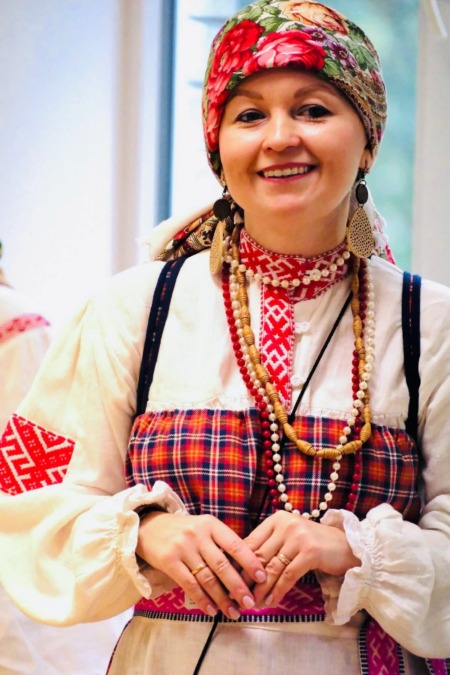
Natalia Ganova
These are the Komi, a Finno-Ugric people and distant relatives of Finns and Estonians. At first confusing, ‘Komi’ functions as a place, a people, and a language—you can say the Komi live in Komi, speak Komi, and carry Komi traditions.
The Komi people’s homeland is located beside the Ural Mountains, to the east of Finland. Today, most Komi people live in the Komi Republic within modern day Russia. A few even live in Finland and Estonia.
During my travels to Estonia and Finland in 2025, I had the pleasure of meeting several Komi people. The first was Nikolai Kuznetsov, a professor of Finno-Ugric studies at the University of Tartu, who told me more about his people, their language, and culture. Little did I know then, the Komi people and Finns have quite a lot in common.
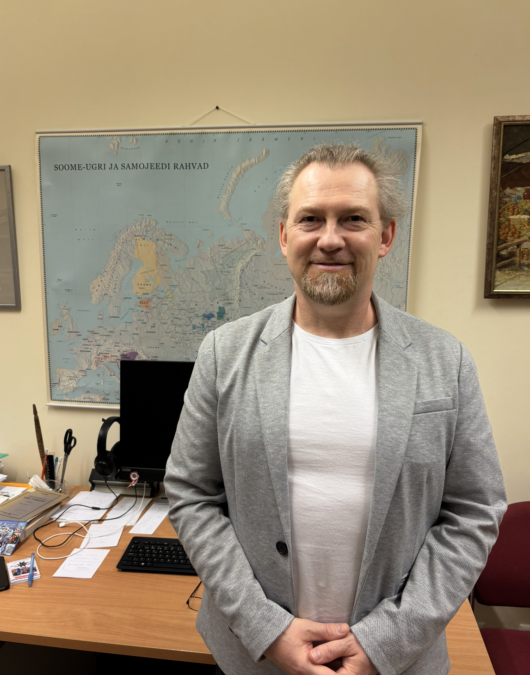
Nikolai Kuznetsov, professor of Finno-Ugric studies at the University of Tartu
The professor told me that his first visit to Finland reminded him very much of his homeland.
“When I went to Finland for the first time, I found that it’s like Komi,” he said. “I don’t know why, maybe because of the weather, the sky, the woods, feeling the wind, and so on. But Estonia is not so cold [as Finland.]”
Not only is the weather in Komi similar to that in Finland, but the Komi people share something else as well.
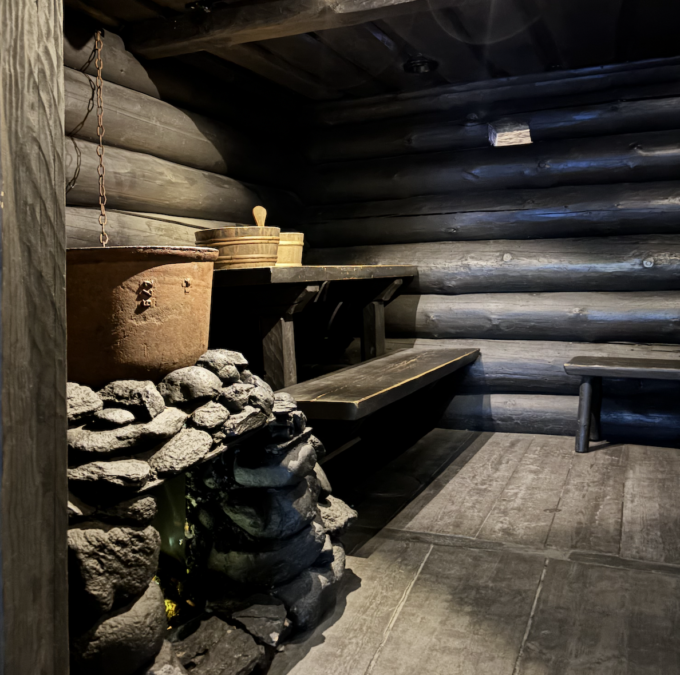
“There is also sauna, of course!” Kuznetsov’s family had a smoke sauna when he was a child and going to the sauna was part of everyday life in his village. Traditionally, Komi saunas are smoke saunas, but most saunas are now electric or wood-burning saunas.
Is it lonely being a Komi in Estonia? There are over 80 people in Estonia who say they are Komi, but they have found ways to stay connected to other Komi people.
Among them is Natalia Ganova, who invited me to her home in Tallinn to learn how to bake a Komi delicacy, called “shangas.” Shangas are circular rye pies filled with mashed potatoes and often eaten with fish. If you are familiar with the oval-shaped Karelian pies, common in Finland and Karelia, these Komi pies are very similar — and are just as delicious!
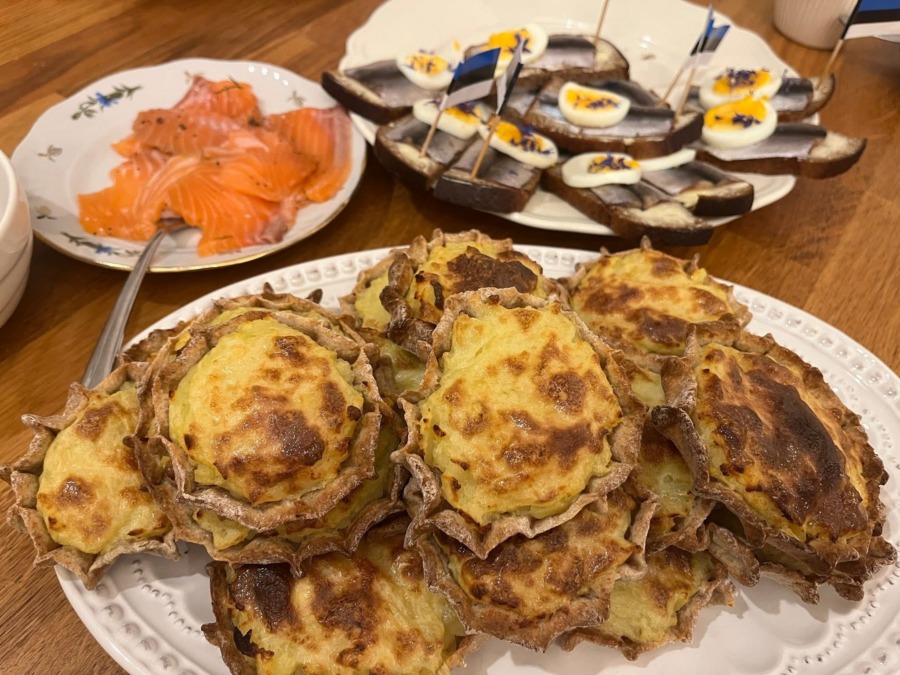
Šan’gas are pies made with rye flour, mashed potato or sour cream porridge stuffing, and egg or buttermilk coating. Sometimes they are eaten with fish on top.
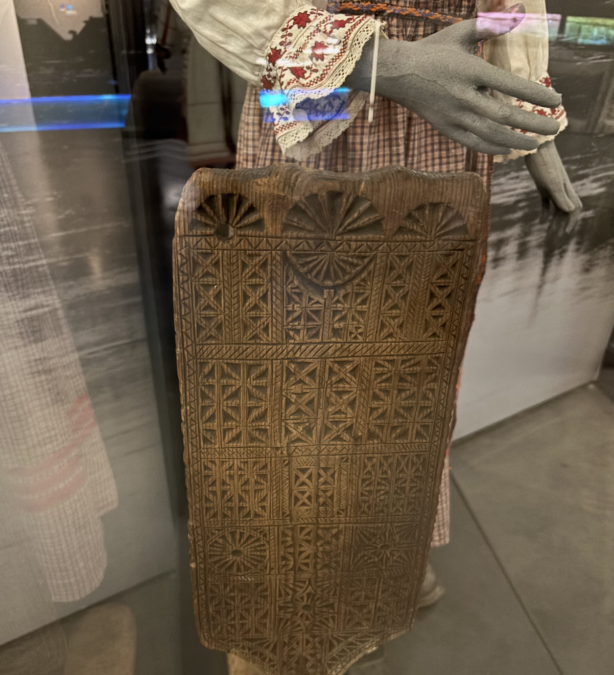
Ganova is also the founder of the Komi Home Museum in Tallinn, where she gave me a tour of Komi hand crafts. Amongst the collection were pairs of woven birch bark shoes and a birch bark backpack. Ganova told me that in these backpacks, Komi hunters would have carried shangas as a tasty “to go” snack.
Also deeply embedded in Komi culture is a respect for nature and this value frequently appears in Komi folk tales.
“You must get from the woods only what you need, not more,” Kuznetsov said.
The professor told me one such story about a hunter who took more than what he needed to feed and clothe himself. The hunter was then punished by the spirit of the forest to catch only squirrels and no big game.
These folk tales have been told in the Komi language for generations, but now the language also faces the threat of serious endangerment.
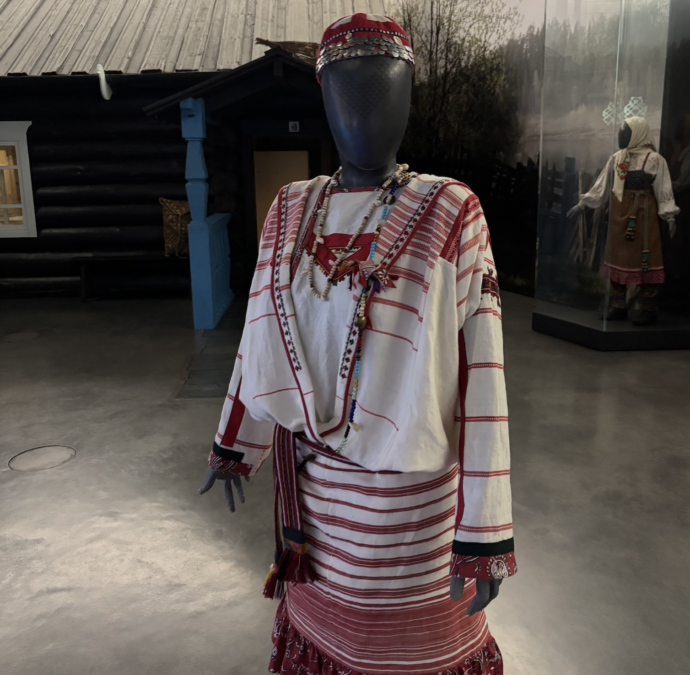
It is estimated that around 108,000 people now speak Komi-Zyrian, a branch of the Komi language. While a large amount compared to smaller Finno-Ugric languages, such as Livonian, this number is decreasing. But why?
“Now we don’t have any schools with Komi language as the basic language, so I learned in Russian,” Kuznetsov said, about his childhood schooling. “We spoke Komi outside of school.”
Even though there are still people who speak Komi, there are very few opportunities to learn Komi. Students are taught in Russian and their parents may also speak to them in Russian, for fear that bilingualism may put their children at a disadvantage.
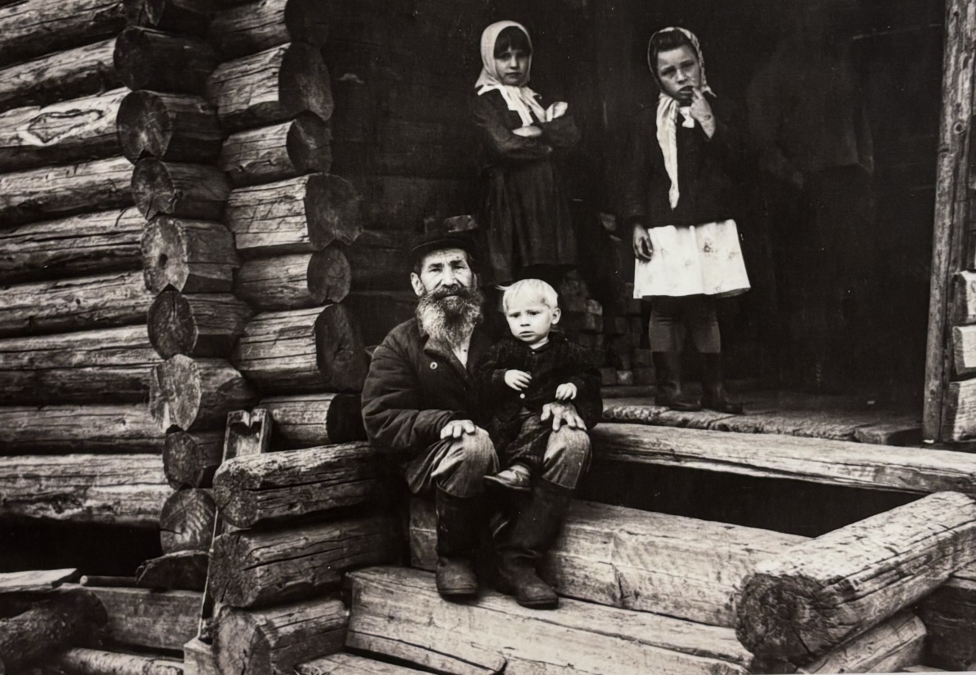
Komi Permyak Ilya Sizov with his grandchildren. Sizovo, Kochyovsky District, Komi-Permyak National Okrug, Perm Oblast. Photo: Kalju Konsin, 1967.
There is hope. There are resources online for learning the Komi language, such as Facebook groups, online machine translation, dictionaries, and media available in Komi. In Komi, some have even begun to host “language nests,” spaces where children can be immersed in the Komi language for a few hours each week.
Saunas, savory pies, birch bark crafts, and a reverence for nature. Learning more about the Komi people and their culture left me surprised by how similar they are to Finns and led me to feel a sense of kinship with Finland’s eastern cousins. As a Finnish-American, I am certainly proud to share so much in common with such kind and resilient people.
Curious to learn more about Komi language and culture? To learn more, check out Komi Daily at komidaily.com.
I hope that my stories in the months to come will ring true with fascinating revelations, echoes of home, and inspire you to visit Hancock for the yearlong Finno-Ugric Capital of Culture festival in 2026. If you’d like to learn more or plan your trip, I welcome you to visit FinlandiaFoundation.org/Hancock2026. See you there! Nähdään pian!