A FINNO UGRIC WORLD TOUR | Article 2 of 12 : First stop… Latvia
Written By:

Gage "Touko" Keränen
By Gage “Touko” Keränen
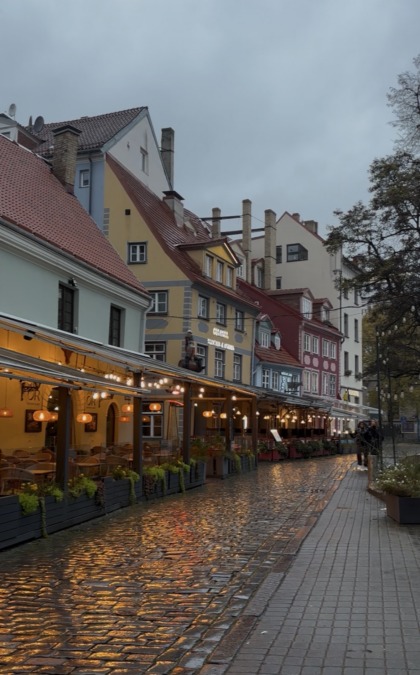
First stop on the Finno-Ugric world tour, Latvia! Of the many places on Earth that I would think of being related to Finland and Finns, this Baltic country was not first on the list, yet Finno-Ugric peoples happen to have a long history of living within present-day Latvia. The Finno-Ugric world represents related languages and cultures stretching from central Europe to the Ural mountains in the northeast.
The Latvian language owes over 500 words to a very small language historically located on the coast of western Latvia. This language is Livonian, a close relative to Finnish and one of the most severely endangered languages in Europe.
A century ago, there were over a thousand speakers of Livonian and a number of books were written in the language. Back then, Livonian could be heard as the everyday language of many coastal villages, where the people were known as great poets, fishermen, and sailors.
Even the nation’s capital, Rīga, was formerly the site of two Livonian villages. Alas, if you travel to some of these regions today, it is very unlikely that you will hear Livonian, as few speakers remain and most live in large cities. The last person to grow up speaking Livonian on the Livonians’ native coast was Grizelda Kristiņa who died in 2013.
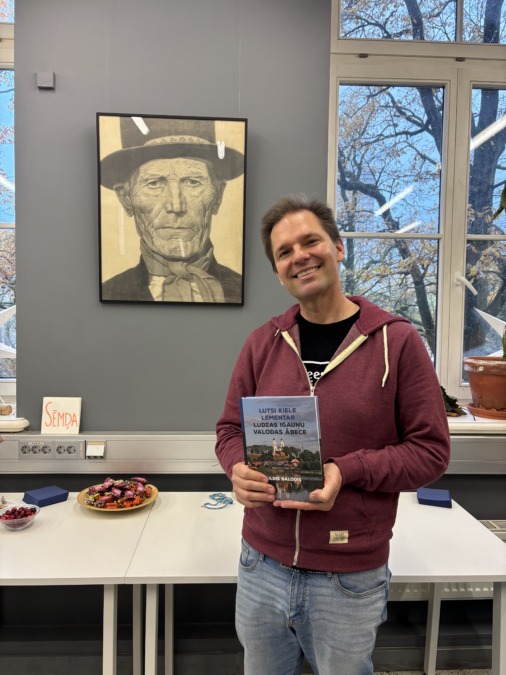
But how did the Livonian language survive to the present day? How can a language grow when its speakers are few and scattered? To learn more about this rare language and its people, I met with Latvian-American linguist Uldis Balodis at the University of Latvia’s Livonian Institute in Rīga.
Balodis was a founding member of the institute where he researches the Livonian and Lutsi languages. Livonian sparked his curiosity when he was in high school and he has been intertwined with the community ever since, despite not being Livonian himself.
According to Balodis, the key to the language’s survival lies in its appeal.
“There is a total cool factor for Livonian that exists among Latvians,” he told me.
With so few Livonian speakers around, capturing this “it” factor has been absolutely vital to attract new language learners. In the recent two decades, a passionate community has grown across several websites and social media platforms, providing the rare space to practice and read Livonian. Many of these language learners are young people who are curious about Livonian, just as Balodis was years ago.
“The internet allows greater visibility,” he explained. “There has always been youth engagement and I agree that it does feel more so than ever.”
Thanks to a combination of documentation, language courses, youth engagement, the “it” factor and a lively community, there are now 30 proud speakers of Livonian and approximately 200 people who are intermediate students.
While learners are often ethnic Livonians themselves, this is not always the case. Many Latvians, just like Balodis, feel that it is important to nurture this local language and to ensure its survival into the future. The language has found a home in the hearts of many — Livonian or not — and this is perhaps the most inspiring achievement of the language revitalization movement.
The success of the Livonian language has been such that it has become a growth model for other lesser known Finnic languages in Latvia. Finnic languages are languages closely related to Finnish, and in Latvia, all of them have fewer speakers than Livonian. They include Leivu, Salaca Livonian, Krevin Votic and Lutsi.
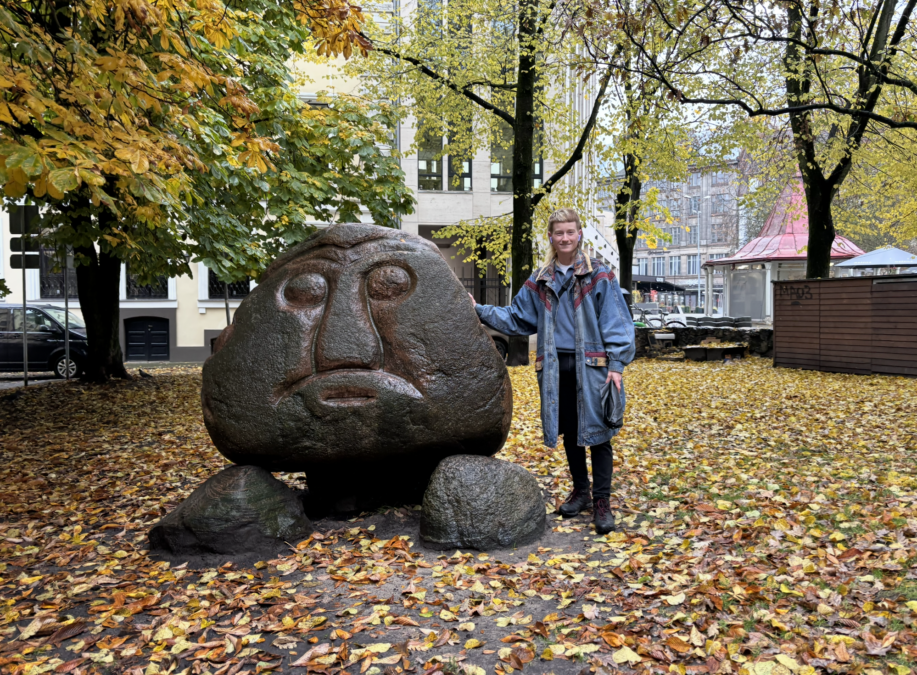
Gage “Touko” stands next to the Head of Ako in the Livonian Square.
As of 2026, Lutsi has no native speakers left, but there are a select few people who remember pieces of their ancestors’ language. These folks are referred to as “rememberers,” and their memories have become the necessary ingredients to shaping the future of the Lutsi language.
In 2020, Balodis — who has Lutsi roots himself — wrote the “Lutsi Language Primer,” a book meant to introduce the sounds, vocabulary and story of Lutsi to interested learners. Including the knowledge of the rememberers, the primer features stories and photos of Lutsi people. As the first of its kind, Balodis hopes that the primer will be picked up by other language enthusiasts.
“It’s laying the groundwork for that by creating a source which can generate interest and inform,” Balodis said. “And then, if there’s somebody out there who wants to take a bit of extra time, they can actually use the primer and the tools… to teach themselves some basic phrases. Then what you need is more materialsto build on that.”
When I asked if he thought Lutsi could see a revival similar to the Livonian language, the linguist told me, “I think it’s possible. I would certainly like that to happen someday.”
Curious to learn more about Livonian or Lutsi? To learn more, check out the websites virtuallivonia.info and lutsi.org, or explore the Livonian Institute’s resources at livonian.tech/en/. “The Lutsi Language Primer” is available to read online at tinyurl.com/ludza/. To see my tour of Livonian Rīga, check out Finlandia Foundation National’s social media pages and website.
I hope that my stories in the months to come will ring true with fascinating revelations, echoes of home, and inspire you to visit Hancock for the yearlong Finno-Ugric festival in 2026. If you’d like to learn more or plan your trip, I welcome you to visit FinlandiaFoundation.org/Hancock2026. See you there! Nähdään pian!