A FINNO UGRIC WORLD TOUR | Article 1 of 12
Written By:

Gage "Touko" Keränen
By Gage “Touko” Keränen
Picture this. You’re an only child and you thought that your parents were also the “only child.” Now, imagine that you find out you have cousins. Lots of cousins. More than 20 cousins. Not only that, but it so happens that your cousins also love saunas! This is what it felt like to learn that we (Finns & Finnish Americans) have “cousins.” I’m talking, of course, about the other Finno-Ugric peoples.
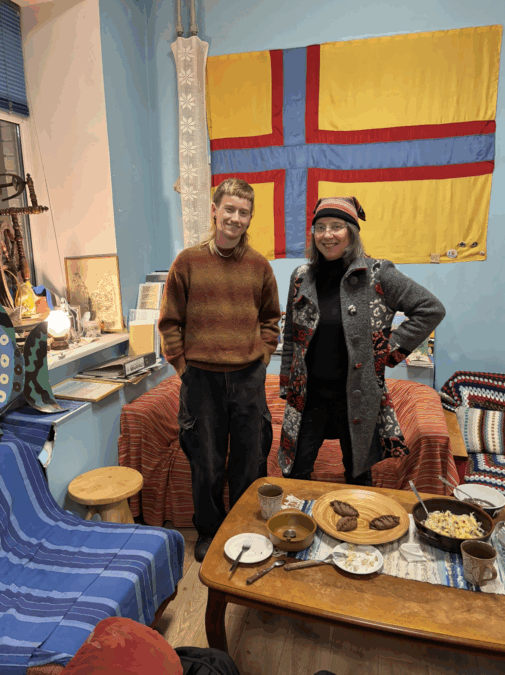
Ekaterina Kuznetsova was the head organizer for the Narva 2025 Finno-Ugric Festival and director of Ingeri Maja.
In brief, the Finno-Ugric peoples are a group of peoples found mostly within Northern Europe, Siberia, and Hungary, who have related languages and cultures. Many Finno-Ugric peoples share remarkably similar traditions, such as sauna bathing and instruments resembling the Finnish-Karelian kantele. According to doctor Natalia Abrosimova of the Tallinn University School of Humanities, there are approximately 25 million people in the world who speak a Finno-Ugric language. That’s about the same amount of people as the entire population of Australia!
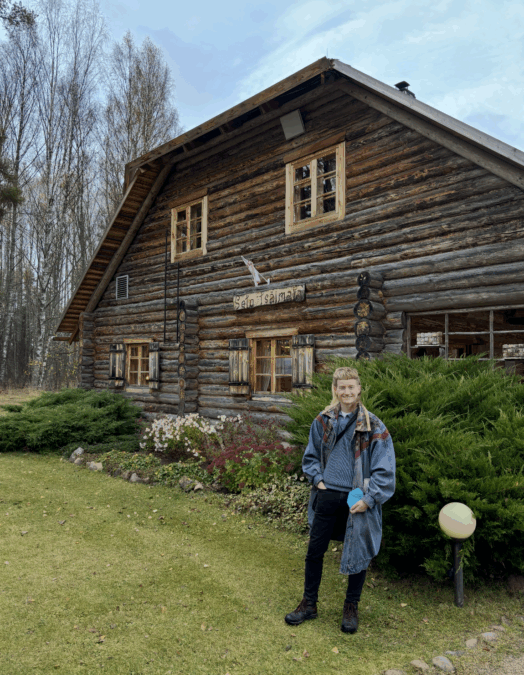
Author stands in front Seto Tsaimaja tea house in Värska, Setomaa in Estonia.
Each year, a city is chosen to be the world’s “Finno-Ugric Capital of Culture,” the site of a festival featuring vibrant cultural arts, community gatherings, and learning opportunities for the Finno-Ugric peoples, facilitated by the Estonian organization, Fenno Ugria. The title has always been given to locations within Hungary, Finland, Estonia, or Russia… until 2025. When Hancock, Michigan, was chosen as the next capital of culture, I was shocked. My family’s home, the Copper Country, was going to host this incredible international festival and I could not be more excited.
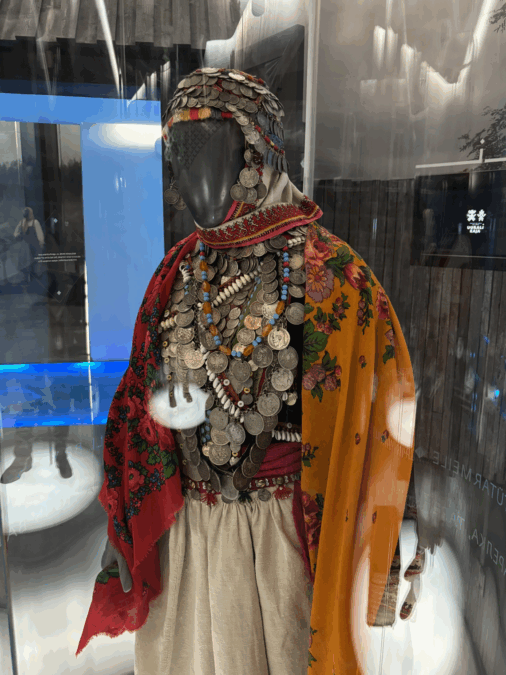
Traditional Meadow Mari costume with ornate coin jewelry at the Estonian National Museum.
With this festival year about to begin, and our cousins about to arrive from all around the world, I figured that it’s about time we find out who’s all coming to dinner. To do this, Finlandia Foundation National sent me on an extraordinary, 18-day journey in the fall of 2025 to Latvia, Estonia, and Finland to meet other Finno-Ugric peoples, learn about our shared roots, and gather their stories, to bring them home to you, dear reader.
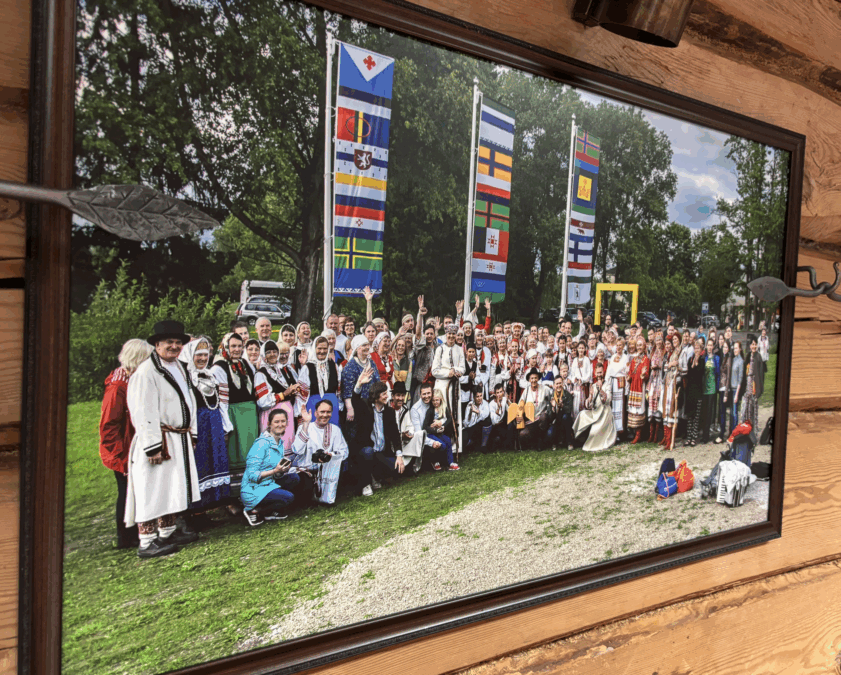
A photo capturing the 2015 Finno-Ugric Capital of Culture in Obinitsa, Setomaa
Along the way, I met with people from resilient communities just like ours—including (but not limited to) the Võro, Komi, Seto, Sámi, Livonian, Karelian, and Votic peoples— and who, in turn, had a lot of questions about the Finnish American world. I hope that my stories in the months to come will ringtrue with fascinating revelations, echoes of home, and inspire you to visit Hancock for the yearlong festival in 2026.
If you’d like to learn more or plan your trip, I welcome you to visit FinlandiaFoundation.org/Hancock2026. See you there! Nähdään pian!
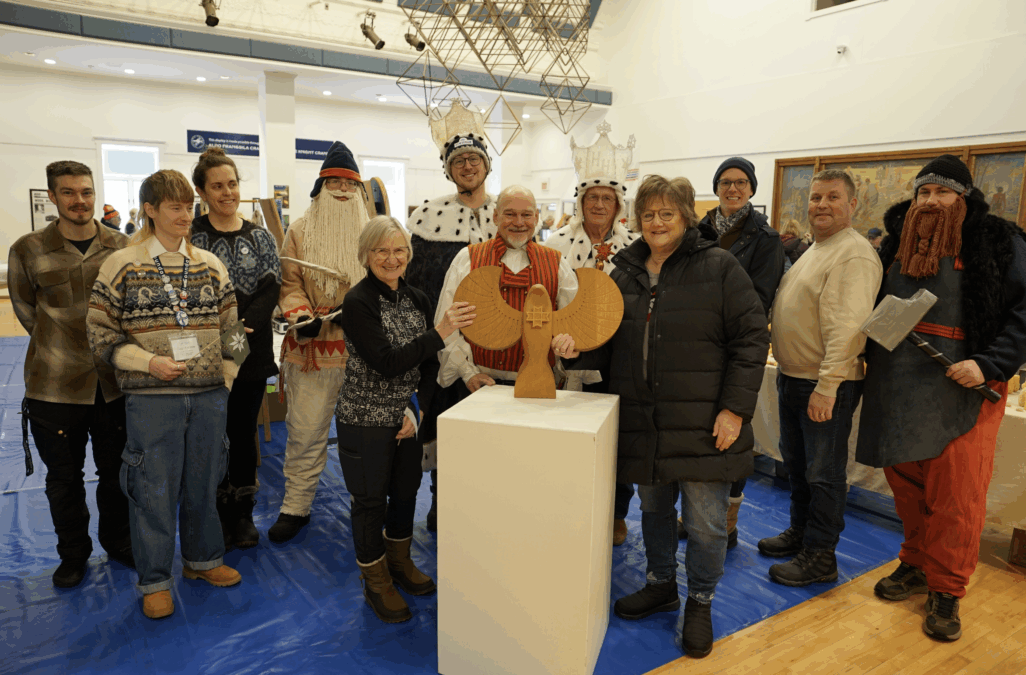
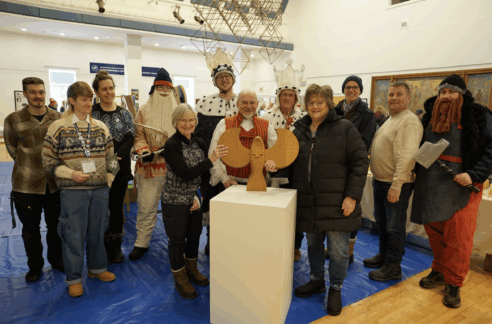
January 24, 2026. The “Tsirk” bird is passed to the 2026 Finno-Ugric Capital of Culture: Hancock, Michigan.
From left to right: Finlandia Foundation Young Leaders Board members, Clare Zuraw, Director of the Finnish American Folk School, Marianne Brokaw, Honorary Consul Jim Kurtti, Hankookin Heikit Jesse Wiederhold and Oscar Heikkinen, Hancock City Manager Mary Babcock, FFN Executive Director Thomas Flanagan, Director of the Finnish American Heritage Center Favid Maki, all joined by two Heikinpäivä characters in costume.