FROM THE ARCHIVE | A Web of Memory: Armas Holmio and the Foundations of Finnish-American Archives
Written By:

Minea Herwitz
Written by J. Chopp, Archivist at the Finnish American Heritage Center Historical Archive
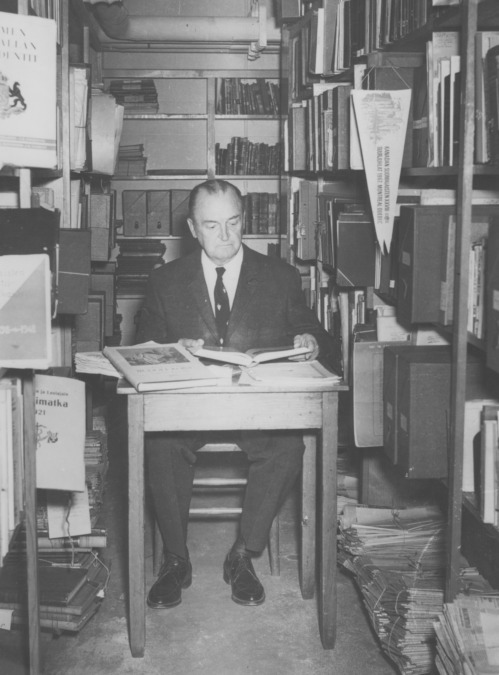
Archives are often spider-webbed with connections between different parts of the collection. An intriguing example of this is Armas Holmio. He was the first archivist to care for and organize the historical collections at Suomi College when the archive was formally established at the school in the 1930s. He was also a member of the faculty and a clergyman of the Suomi Synod. His name and influence are everywhere in the FAHC Archive.
He’s in the photo collection, and in the oral history collection talking about how the archive doesn’t need any more parlor Bibles. There are files of his lecture materials from the courses he taught. He was mentioned often in the yearbooks and the student newspaper, Suomi Inklings. His impact can be found in meeting minutes from both the college administration as well as the Synod Consistory. There are also have copies of the books he wrote.
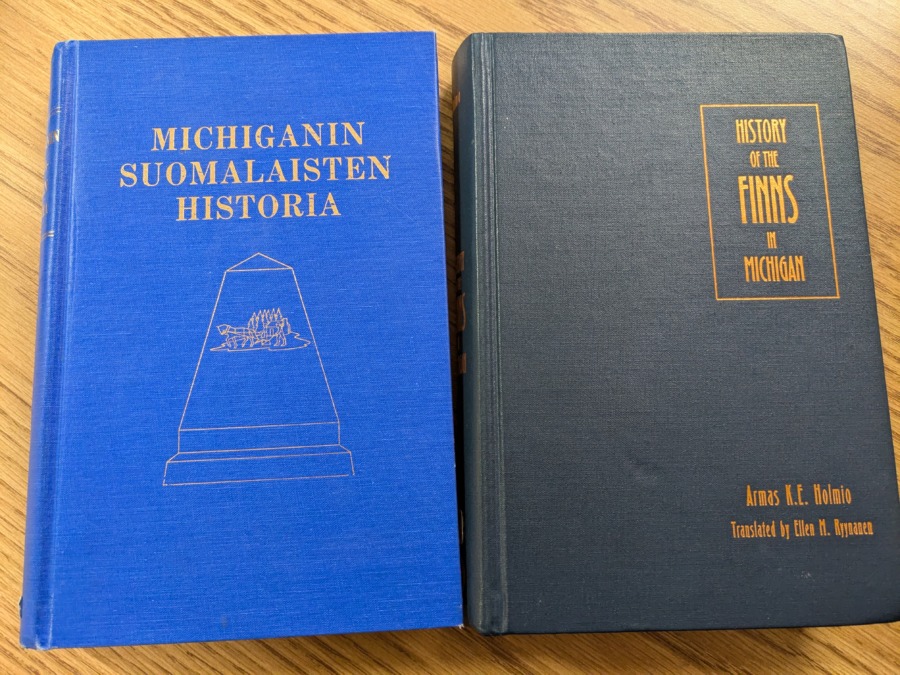
In 1967, he published Michiganin Suomalaisten Historia. It was translated sometime later into English by Ellen Ryynanen, and has become one of the most helpful references to just about anyone researching the history and heritage of Finnish America. History of the Finns in Michigan isn’t only pertinent to researchers who want to know more about when, where, and why the Finns came to Michigan. At the peak of immigration, most Finns at least passed through the Upper Peninsula or knew someone who did, even if they quickly dispersed to other states. Learning about their history in Michigan gives context to how and why they ended up in places like Arizona, Montana, Ohio, or Florida, spreading out across the country with a web of connections helping to maintain cultural heritage and familial ties.
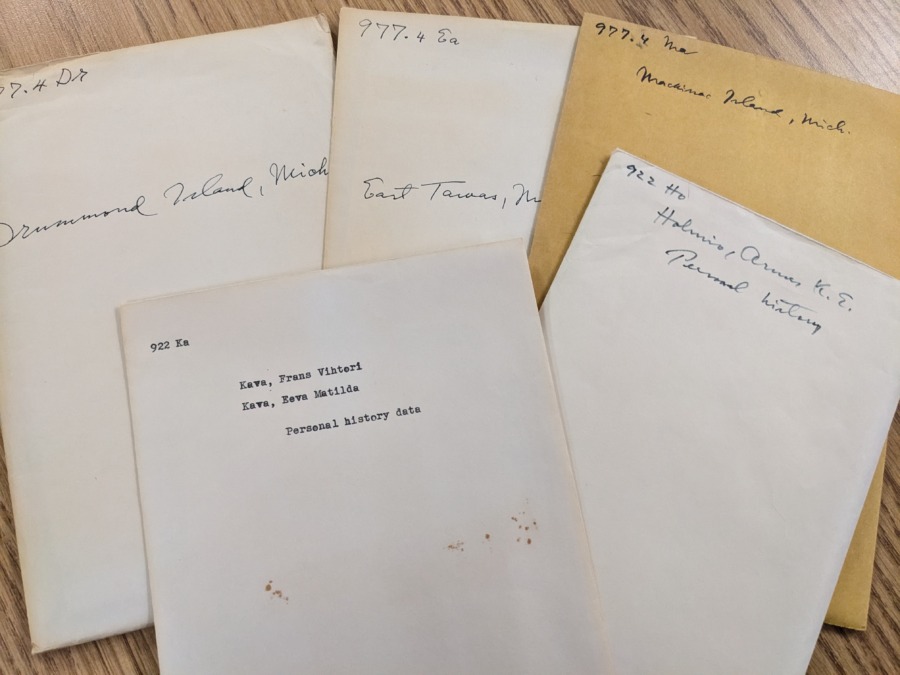
And while this book is invaluable as a preliminary resource, what most researchers don’t know is that Holmio collected information and materials that never made it into the pages. There are two boxes in particular that are organized in small envelopes labeled either with the name of a person or a place. Most contain at least a handwritten note of references that point the reader to other books or newspapers that have information pertinent to that particular topic. The most interesting contain snapshots, event programs, or other ephemera.
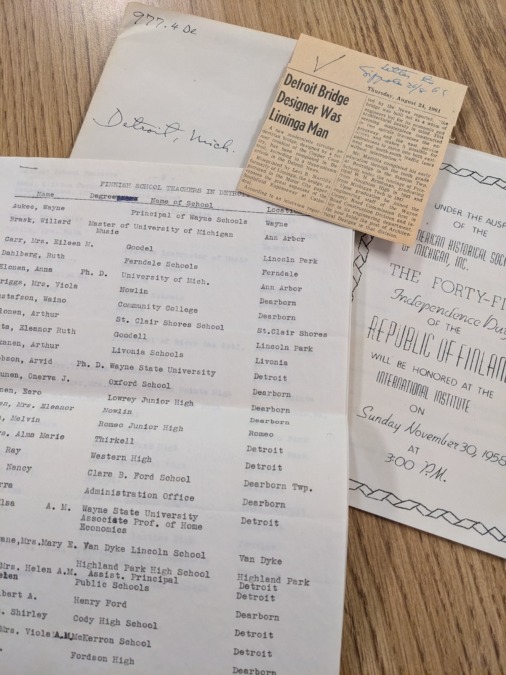
The envelope about Detroit has a list of someone compiled and typed up of the names of Finnish school teachers in Detroit, which includes their full names, the names of their schools, and where each was located. It’s hard to imagine the use of such a list today, but imagine the excitement to find the name of a relative on there and get a small insight into what their life was like. Such an experience is only possible today because Armas Holmio took his job as archivist seriously.