Moving the Mountain of Disbelief with a Tiny Seed of Faith
Written By:

Nina Dahlblom
Written by Nina Dalhblom, with photos by Ari Backholm.
Merimieskirkko, the Seaman’s Church is celebrating its 150 years jubileum and it was honored with the Expatriate of the Year award this year. Doctor of Philosophical Theology and Pastor Jarmo Tarkki, more a reformer than a tradition romantic, has been working among the Finnish Community in America for over a decade. This is his interview.
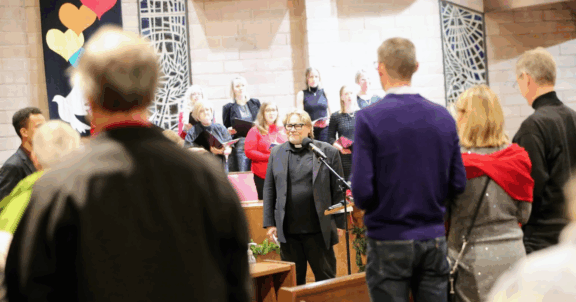
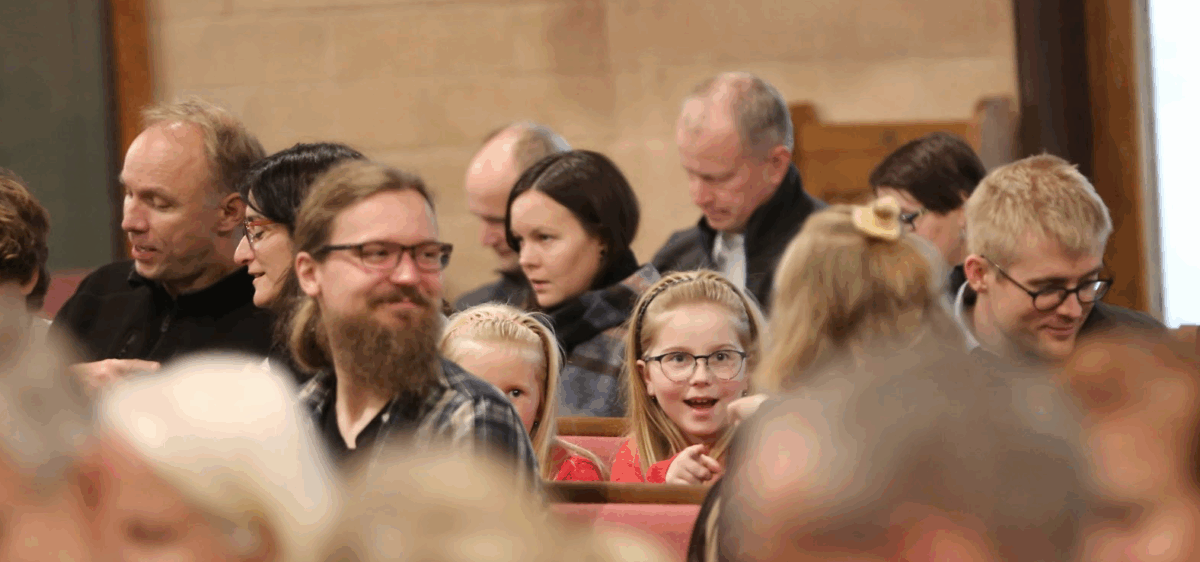
I still remember my first Kauneimmat Joululaulut — “The Most Beautiful Christmas Songs” — service in Silicon Valley, back in 2015. The church in Sunnyvale was packed with Finns, the air alive with familiar melodies and the gentle scent of coffee and gingerbread wafting from the parish hall. I had only lived in California for a few months, but that I felt at home. I knew everyone already. I had started at my first job role, we had a new home, and all was well. As the familiar Finnish carols soared, tears of gratitude ran down my cheeks.
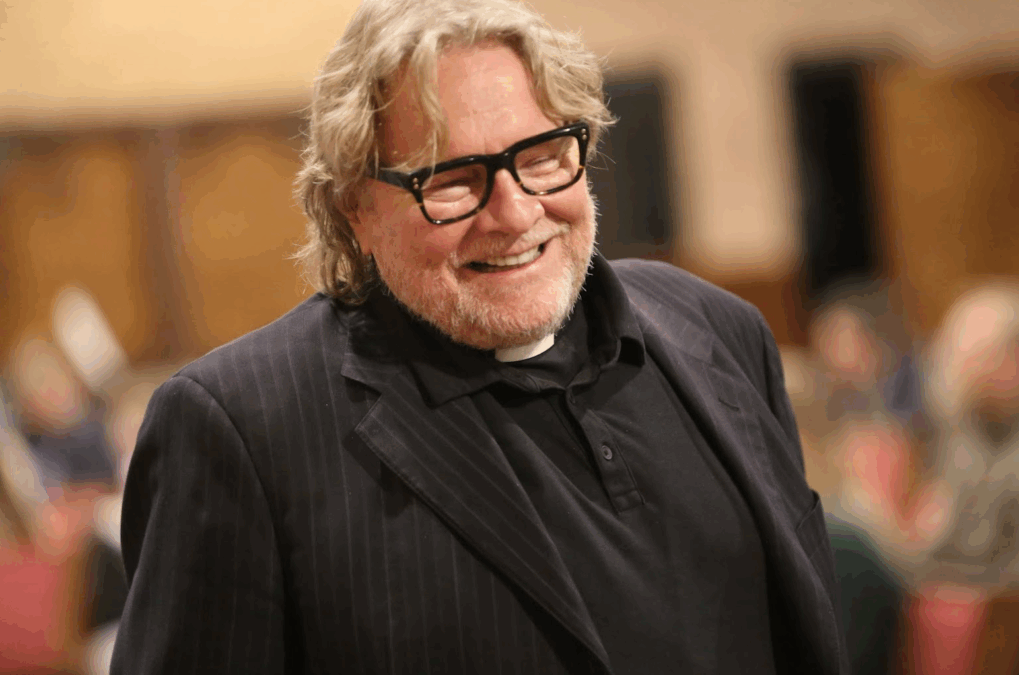
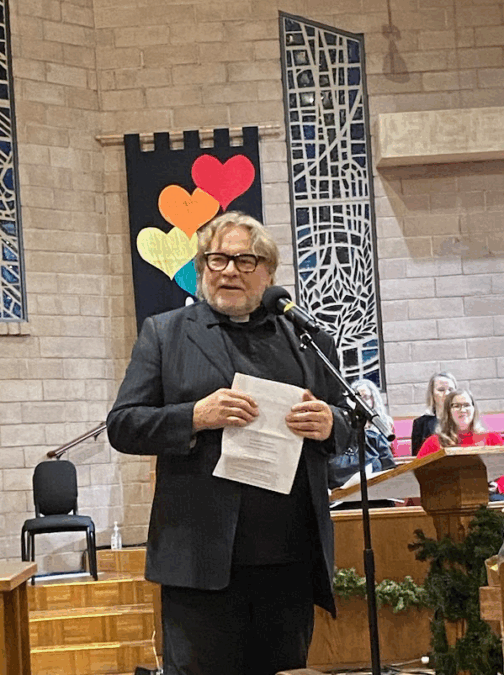
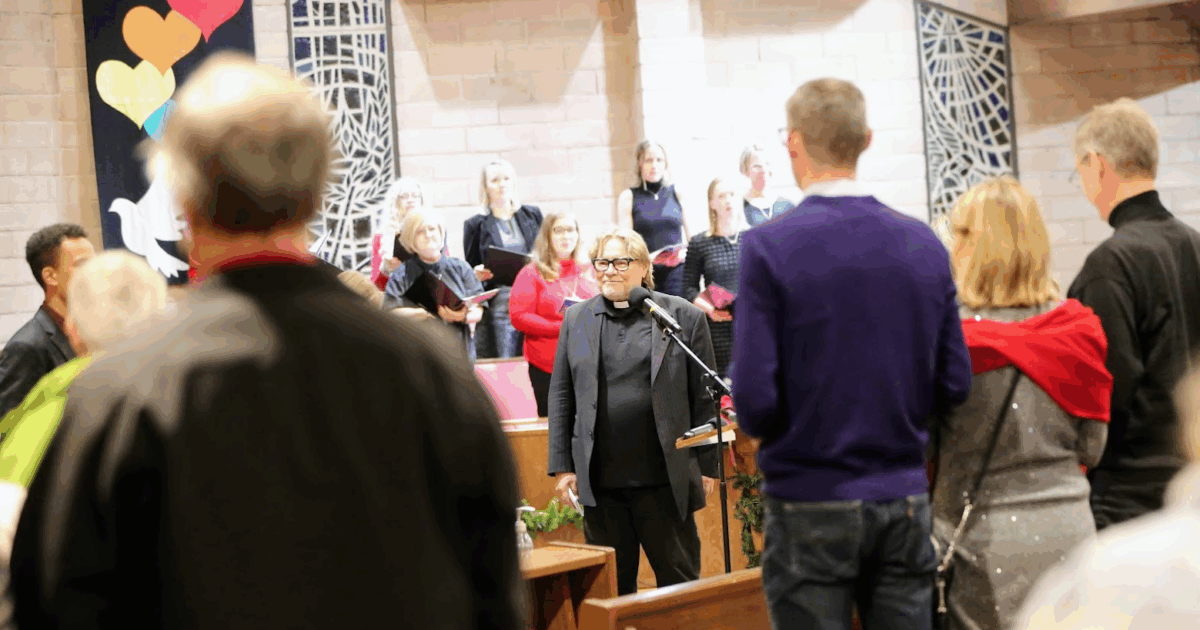
At the pulpit stood Pastor Jarmo Tarkki — lively, relaxed, and unforgettable — delivering the Christmas Gospel – in Savonian dialect. After the service, an army of volunteers hurried behind the kitchen counter, arranging Christmas Star pastries for the crowd. It was community in its purest form: Finns abroad gathering for a shared moment of music, memory, and tradition. Not so much religious event as a cultural one but filled with deep emotion and sense of belonging. “And this cannot be done alone. It takes always a local dynamo and a group of volunteers to make this happen” Tarkki reminds.
After the event my husband remarked that Pastor Jarmo Tarkki seems like someone he could have a beer with. When I share this with Tarkki, he hesitates just a moment before smiling: “A beer or a glass of wine—either works. You’ve got a clever man there. Anytime!”
For more than a decade, Pastor Tarkki has served Finnish immigrant communities west of the Mississippi and into Mexico. The Evangelical Lutheran Church in America (ELCA) and the Evangelical Lutheran Church of Finland support to pay his salary. He enjoys his ongoing dual role of supporting the immigrant adoption to the local communities through church activities and at the same time he supports the Finnish identity, tradition and culture.
In 2025, the Finnish Lutheran Church in America formally joined the Finnish Seamen’s Mission — Merimieskirkko — a global network originally founded 150 years ago to serve sailors abroad. Today, its mission extends far beyond ports and shipping lanes, offering community and spiritual life for Finns around the world. The Finnish Seamen’s Mission was also honored as the Expatriate Finn of the Year this year.
Tarkki sees this evolution as both natural and necessary: “Removing overlap clarifies and strengthens our work,” he says. Yet beyond organizational matters, while he deeply values the history of the Seamen’s Church, he also recognizes the need to renew how the church communicates and teaches the gospel in a modern world. His focus is less on structure — and more on reshaping the message.
A Theologian Who Welcomes Doubt
Jarmo Tarkki has lived in the United States for over forty years. His path to theology began with spirited debates in Finland with his father, who was also a pastor — and perhaps appropriately, his curiosity earned him a temporary ban from Sunday school for being “too lively.”
He was ordained in Helsinki in 1977 and earned his PhD in philosophical theology at the University of Helsinki in 1994. Over the years, he has taught at California LutheranUniversity in Thousand Oaks and Pacific Lutheran Theological Seminary in Berkeley, served as pastor in Solvang, California, and written extensively on bioethics, social theory, and the philosophy of authority in religion.
He is fierce and inviting his community to look inside a pastor’s inner world of faith. “Many theology students start out as strong believers,” Tarkki says. “But by the time they graduate, only a fragment of that faith remains. The school is hardest on those who believe the most.” He sees that as a good thing.
To him, faith and reason are not enemies. “Scientific debate belongs in Christian conversation,” he says. “The church’s task is to raise children into adults.” Tarkki often speaks about the courage to doubt — to question the Bible, the church, even God. He believes that faith does not require blindness or bravado. “Maybe it’s enough to have just a mustard seed of faith — enough to move mountains, as the saying goes.”
Beyond Ritual: The Authentic Encounter
Tarkki challenges the assumptions that shape religious life. “People assume the pastor believes,” he explains. “It becomes a kind of vicarious faith. The congregation expects the pastor to act a certain way, and the pastor assumes the congregation expects it. In the end, everyone’s performing roles in a strange play, and no one meets as their true self.” Through what pastor Tarkki talks about he welcomes people to meet his true self. And that is brave.
His decades of pastoral work — from funerals to weddings, baptisms to counseling, as pastor or a prison chaplain — have grounded him in the raw reality of human need. “I’ve buried perhaps a thousand people,” he reflects. “At the graveside, even the toughest man becomes a child again — reaching for belief in an afterlife, in reunion, in hope. Maybe we need that belief to face loss. But would we really want to live forever? That’s worth thinking about.”
For Tarkki, acknowledging the tension between myth and meaning is essential. He points to the story of the Good Samaritan as an example: “It doesn’t matter whether it’s a historical story or not. The moral is clear — compassion transcends creed.”
He doesn’t shy away from contradictions in Scripture either. “There are countless stories in the Bible that don’t align with history,” he says, “yet millions take them literally. That’s where the church must grow up — to see love, mercy, and hope as the core of faith, not to drive people to read every word as it is written.”
A Pastor of Many Worlds
Tarkki’s background reaches beyond the pulpit. He has been a newspaper editor, television host, columnist, political campaign manager, even a merchant seaman at the Seamen’s Mission in London in 1972. He also happens to be a former Finnish chess champion and public-speaking champion — a résumé that mirrors his intellectual curiosity and worldly experience.
Such range helps him connect with diverse immigrant congregations. Recently, Finnish defense deals have drawn new expatriate families to Texas, while earlier generations of Finns settled around the Great Lakes area.
He tells a favorite story of Mrs Hilja Cliff, a 104-year-old Finnish-American matriarch who once drove to church with two younger friends — aged 94 and 96. “With one of her 4 husbands, Hilja bought land in Las Vegas in the 1930s and later donated the profits to build Seattle’s Mäki Hall,” Tarkki recalls.
The Seamen’s Church, Merimieskirkko continues to perform baptisms, confirmations, and weddings across the U.S., often in person, but services also virtually. “Sometimes people ask me to officiate in Florida, but my credentials are for Texas and California. And the church doesn’t cover travel expenses.”
The Challenge of Belief
When asked what young people need from the church today, Tarkki mentions the “three Bs”: Belonging, Behavior, and Belief. The hardest one, he says, is belief. “Sixty-seven percent of those who leave childhood faith behind do so because the church teaches outdated ideas — or because they don’t even know who wrote the Bible, or what it means.”
Still, he finds inspiration in the persistence of dialogue. “Even doubt is a form of faith,” he says. “It keeps us searching.” He recently invited people from different walks of life to ask him anything about faith and religion. “I will answer any question. If there is dialogue — even debate, I welcome debate — something good can come out of it.”
In that spirit, he admires how the ELCA — his American home church — has evolved. “The ELCA approved same-sex marriage back in 2009,” he notes. “That was ahead of the Evangelical Lutheran Church of Finland, where the matter remains unresolved. I was frustrated by how such a small conservative minority continues to delay progress and uses so much time and energy to this matter, a matter that could be solved in seconds. It was frustrating for me, but debate is important even within the church and especially when people have different opinions.”
He also reminds his congregants that not all Lutheran churches are alike. “Unlike in Finland, there are several Lutheran denominations in the US. Some of them still don’t ordain women or even allow them to vote.”
He describes America as a supermarket of faiths — home to some 30,000 Protestant denominations and countless others besides. “And snake-oil salesmen on every branch,” he adds with a wry smile. Yet amid this abundance, he believes authentic spiritual hunger remains.
What he values most about the Lutheran tradition is its moral compass: “We emphasize that what is right. We value ethics. Sometimes the process is slow, but the direction is humane and good.”
A Philosophy of Hope
In a world defined by uncertainty — artificial intelligence, political polarization, climate anxiety — Tarkki believes people cling to the illusion of permanence. “Change frightens us,” he says. “Especially as we age. But history is full of turning points. Something is always shifting — and maybe that’s good.”
Finnish president Mauno Koivisto used to quote: “If we do not know what is happening, let us assume something good is.” Based on our discussions it is obvious Jarmo Tarkki agrees and thinks we should welcome change bravely. Even in the church or in ourselves.
As we approach another Christmas, pastor Jarmo Tarkki’s message echoes across both sides of the Atlantic: faith need not mean certainty, nor must doubt mean despair. And the Christmas spirit is the same for everyone. Sometimes, a mustard seed of belief — in goodness, in community, in the possibility of renewal — is enough to move mountains.
California and Texas Finnish Church celebrate “Most Beautiful Christmas Songs” services this December. Please join us:
- Dallas – Sat, Dec 13 at 5 PM, Rejoice Lutheran Church, Coppell: www.rejoicelutheran.org
- San Diego – Sat, Dec 13 at 5 PM, Incarnation Lutheran Church, Poway: godamong.us
- Santa Monica – Sun, Dec 14 at 1 PM, St. Paul’s Lutheran Church, Santa Monica: stpaulsantamonica.org
- Silicon Valley – Fri, Dec 19 at 7 PM, Grace Lutheran Church, Palo Alto: finlandiasf.org/events