
Discovering the heritage of Finnish pioneers on the Mendocino Coast, CA by Nina Dahlblom
Written By:

Nina Dahlblom
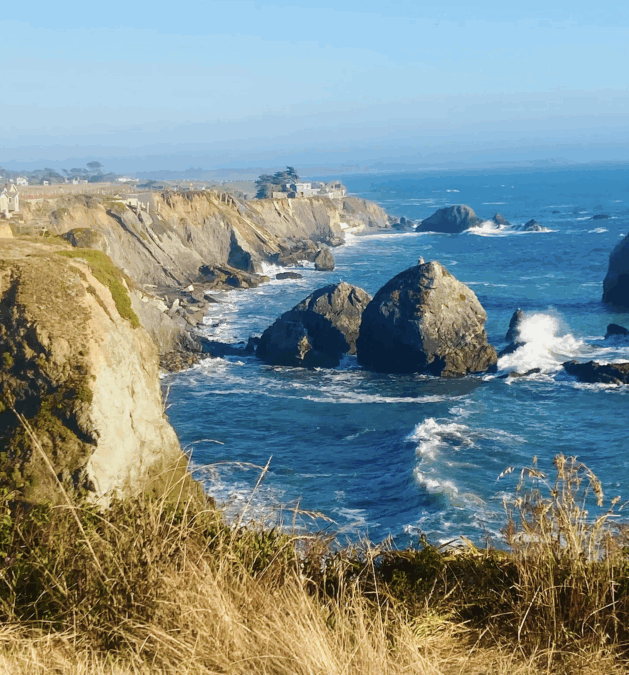
Northern California’s rugged coastline, with its sweeping cliffs and redwood forests, has held me captive more than once. We first fell in love with Mendocino County years ago, and when we discovered a century-old cabin just a stone’s throw from the ocean, tucked into the middle of the redwoods, we knew we had found a place we’d want to return to again.
That cabin gave us an instant sense of belonging—perhaps the same feeling Finnish immigrants once carried with them when they arrived on this remote coast.
Thanks for reading! Subscribe for free to receive new posts and support my work.Subscribe
Inside, it has all the modern comforts, but what makes it special are the touches that remind me of my grandmother’s home: the rose-patterned coffee cups with gold trim, the kind that make morning coffee taste even better when paired with homemade pulla on the deck. When we’re away, others celebrate birthdays and even weddings there. For us, it’s a haven of slow mornings, old books and yellowed newspapers. Through those historic journals I discovered how rich Mendocino’s history really is—and how deeply Finns were a part of it.
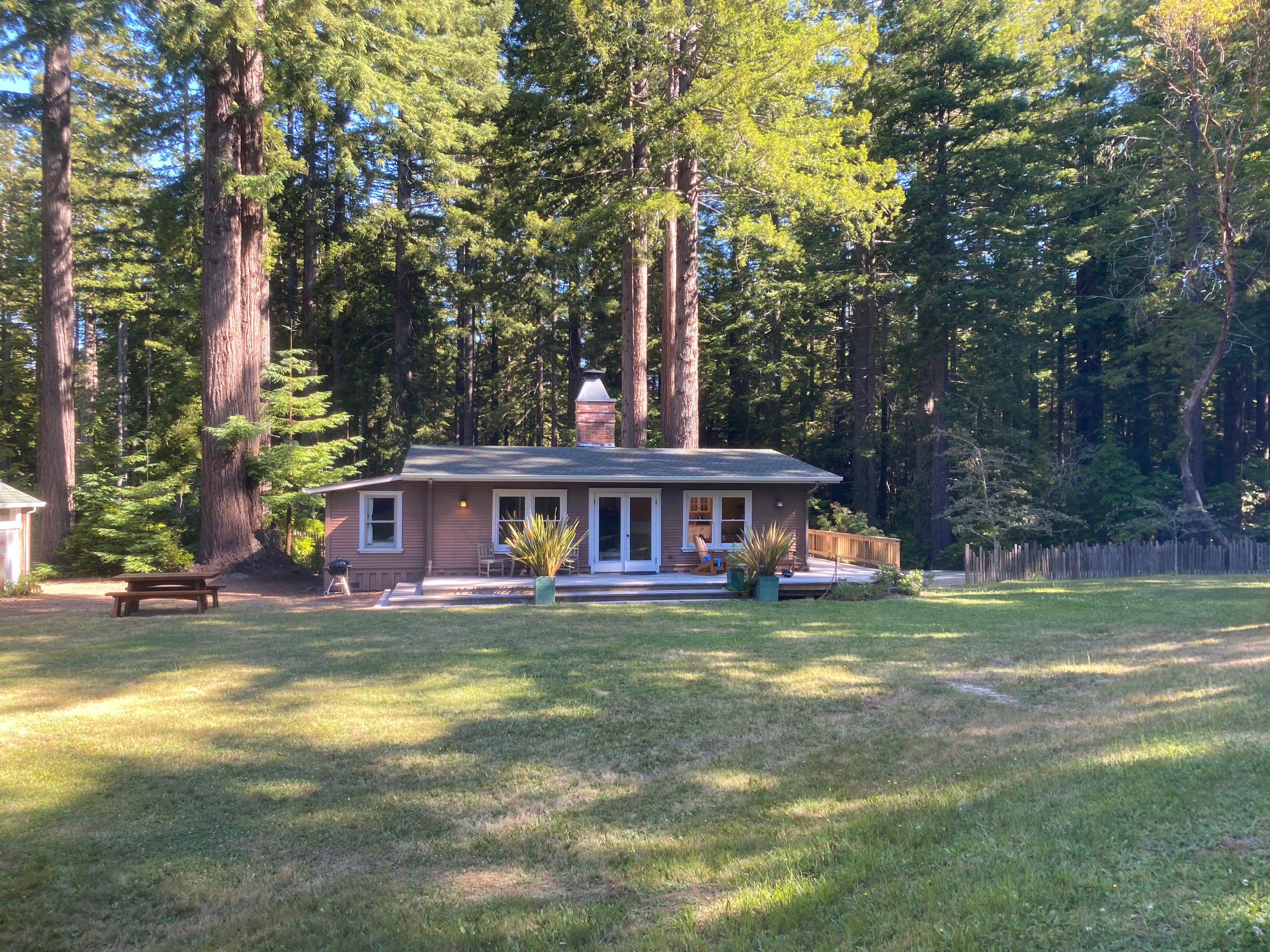
Photo: The red wood cabin built in 1926 that makes us come back to Mendocino County.

Photo: Finns gathered together out in the park around 1890-1910.
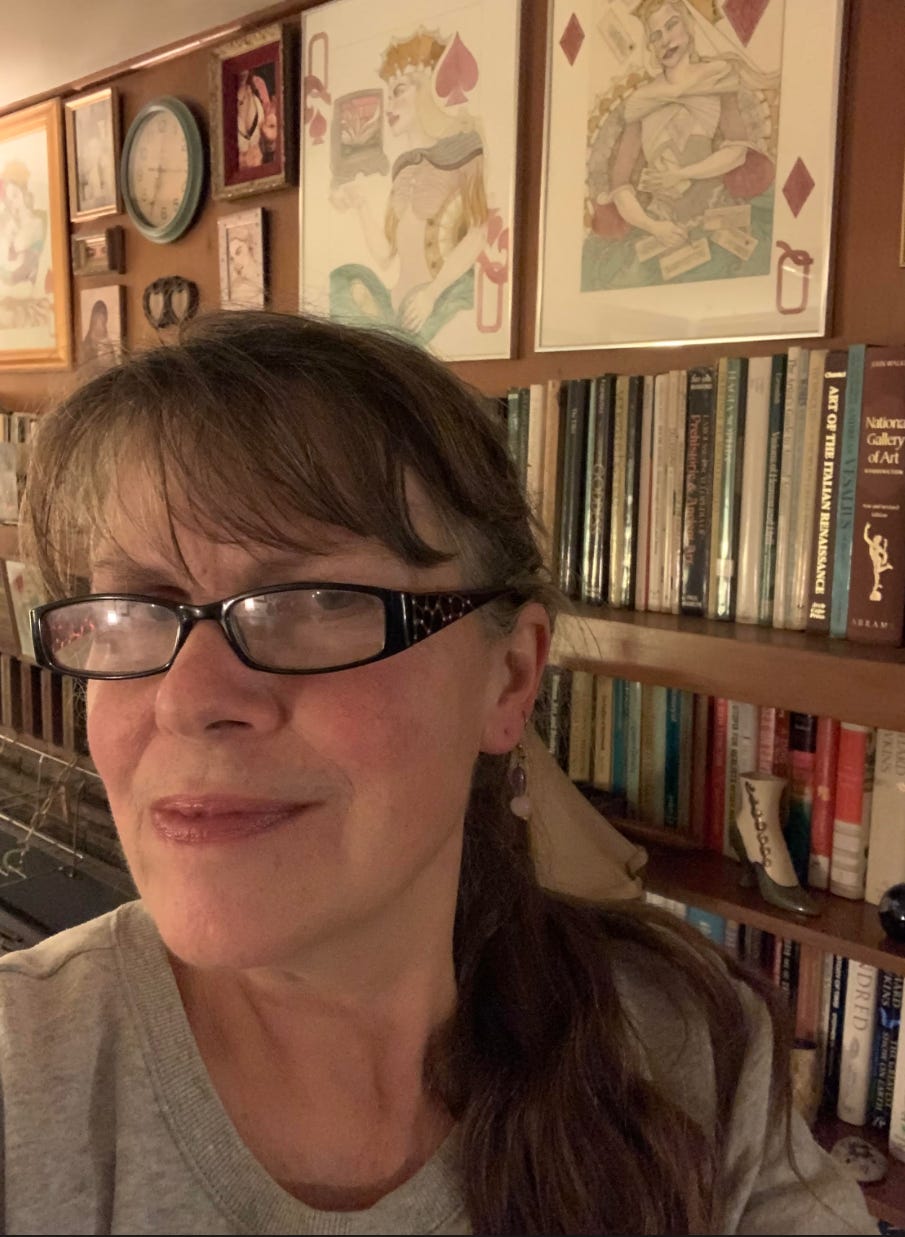
Photo: Mural Artist Laura Sinnott
Discovering Finnish Roots in Fort Bragg
On my last visit to Fort Bragg, I first learned about this Finnish legacy. A lovely mural artist named Lauren Sinnott—who calls herself “The Adopted Finn”—introduced me to it. As part of Fort Bragg’s Alleyway Art Project, she painted a mural depicting local Finnish immigrants and their daily lives. You’ll find it today on the 300 block of North Franklin Street in Fort Bragg.
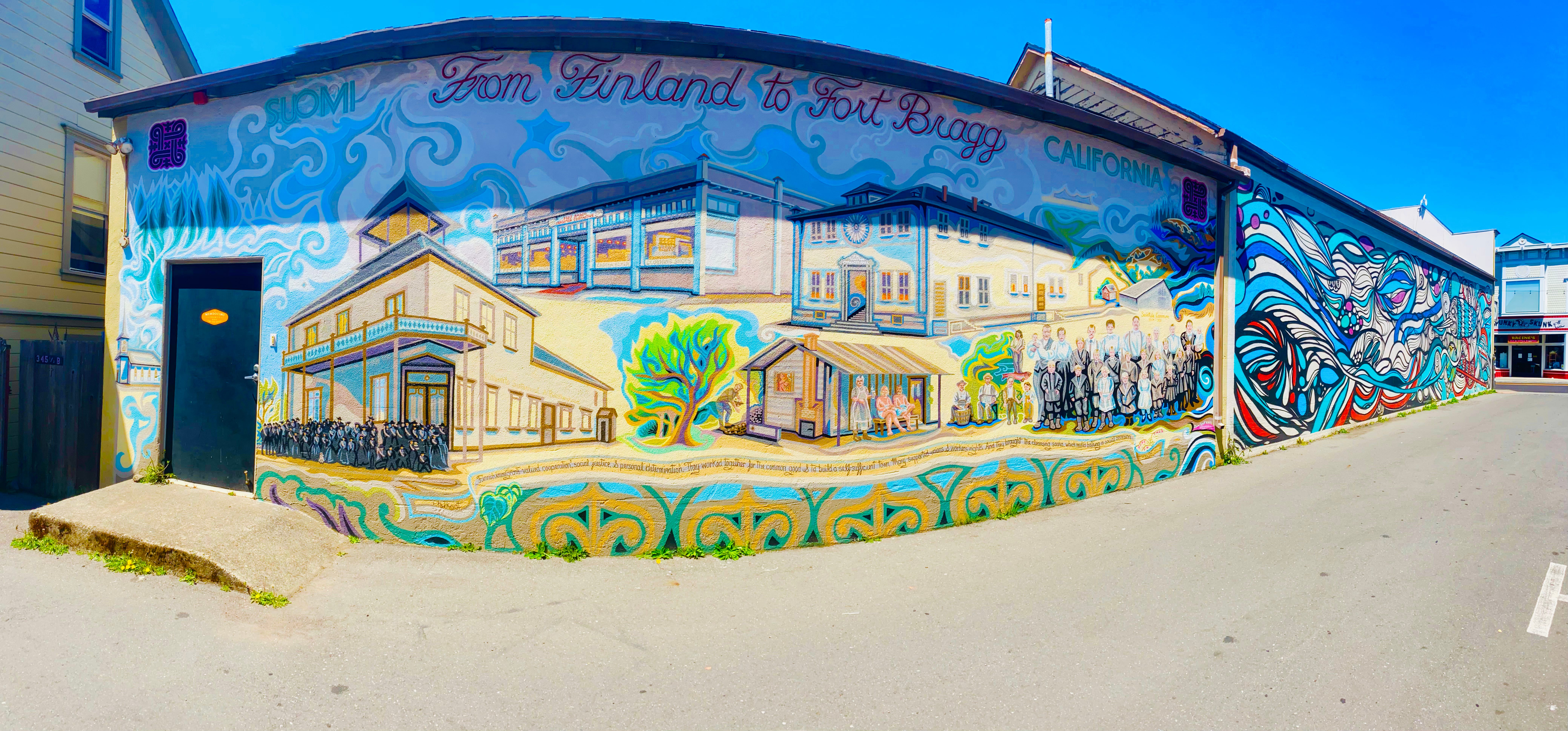
Talking with Sinnott, I learned that Finns were the single largest immigrant group in Fort Bragg. The first Finn settled here permanently in 1869. By the 1880s, sailors, loggers, sawmill and lumber workers, and fishermen were arriving in larger numbers, building a community that soon became known as Finntown on the eastern edge of town. Children played in a neighborhood known as Kakaramäki—literally “Kid Hill.” Areas like Pudding Creek, Tunnel Hill, Noyo Hill, and Comptche became hubs of Finnish life.
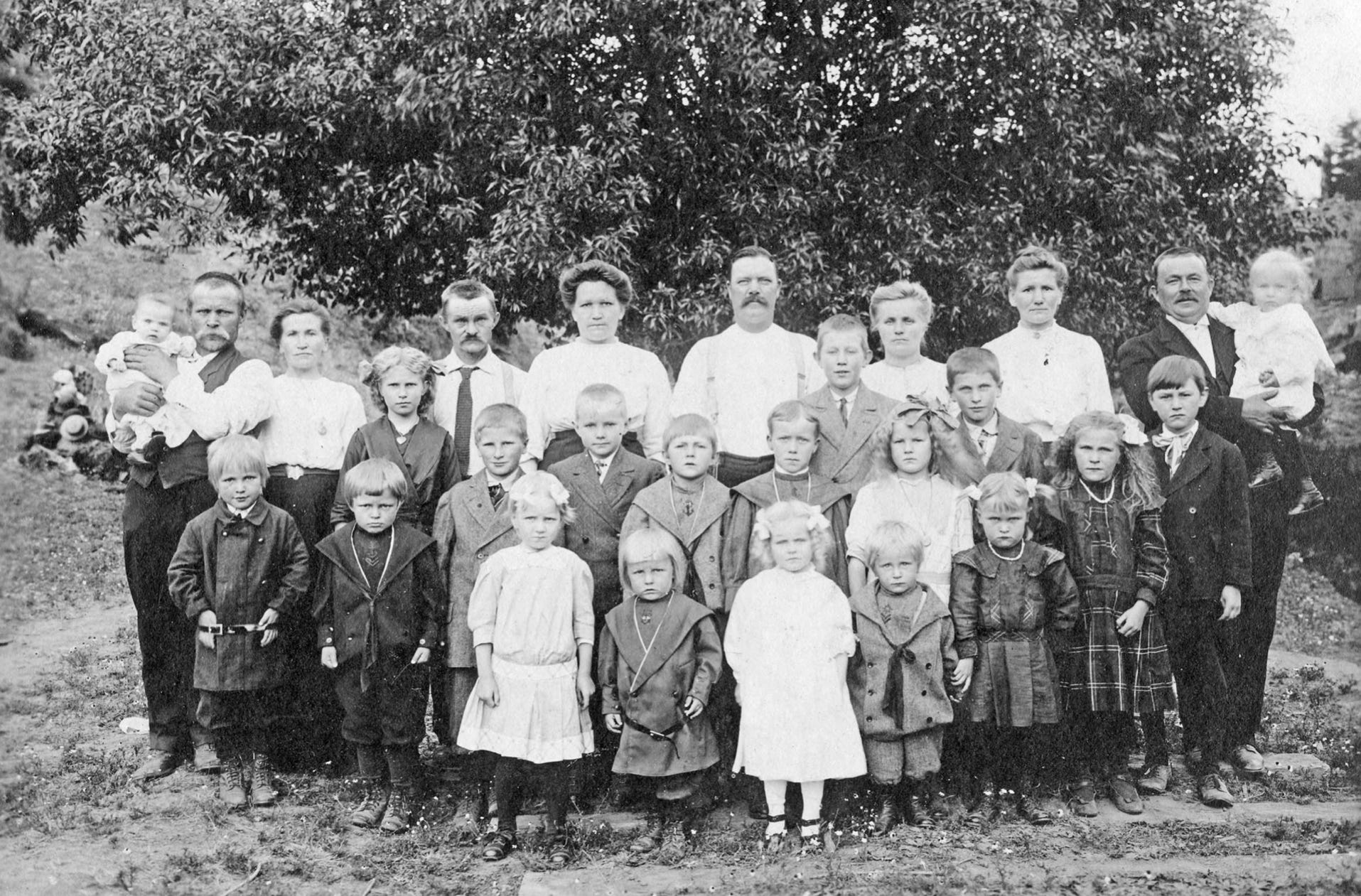
Photo: Sointula was founded by four Finnish families: Mankinen’s, Eriksson’s, Arvidsson’s and Jacobson’s.
The Dream of Sointula
In 1904, four Finnish families Erikson’s, Mankinen’s, Jakobson’s and Arvidson’s founded a utopian commune called Sointula (“Place of Harmony”) eight miles east of Fort Bragg along Kass Creek. Each family had a small house, barn, cow, and garden, while larger facilities like the sauna, blacksmith shop, horse barn, and swimming hole were commonly used. The 650-acre land itself was steep, dotted with massive redwood stumps and red wood tree trunks. Farming was nearly impossible, so men split timber into railroad ties by hand to pay the mortgage. The community survived on this labor, as well as foraging for berries in the surrounding hills.
We tried to find Sointula, but we could not navigate to the property. So much had changed. Although the commune lasted only until 1958, Sointula left behind a legacy of resilience and cooperation—a Finnish instinct carried across the ocean.
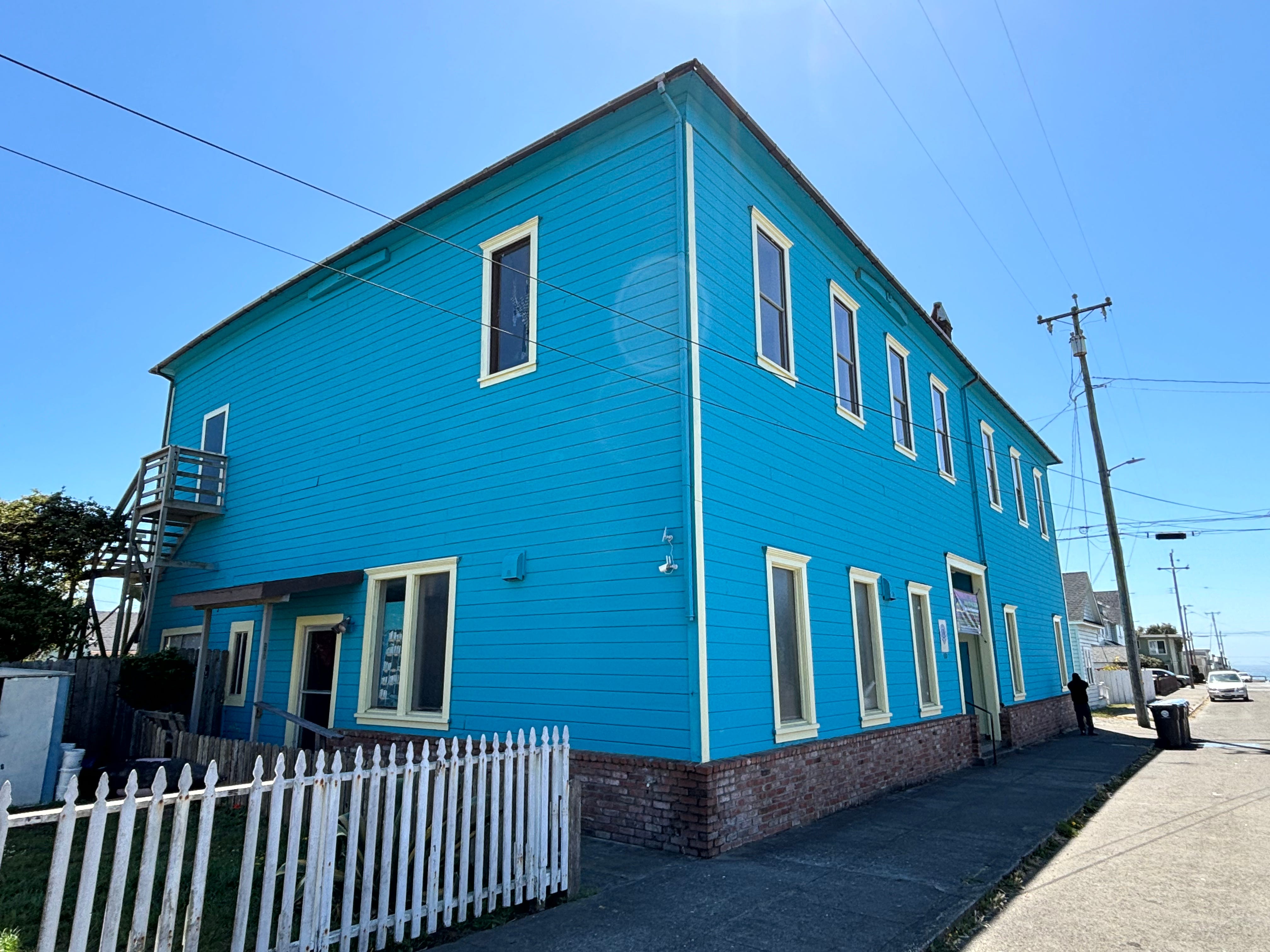
Photo: Fort Bragg Kaleva Hall – 430 Redwood Avenue, now run by Lions Club.
Culture, and Community
Like many immigrant groups, Finns brought with them not only skills but also strong convictions. In the 1880s, they organized temperance societies to combat the destructive effects of alcohol among miners and timber workers. Fort Bragg’s chapter, Lännen Toivo (“Hope of the West”), built a hall on 430 Redwood Avenue that hosted concerts, plays, lectures, and poetry readings, along with libraries and reading rooms.
The Fort Bragg Kaleva Brotherhood and Sisterhood, founded in the 1890s, bought the property and continued promoting Finnish culture, raised funds to support widows and the sick, and kept traditions alive through music, theater, and community gatherings. Their hall—still standing today—now houses the Lion’s Club.
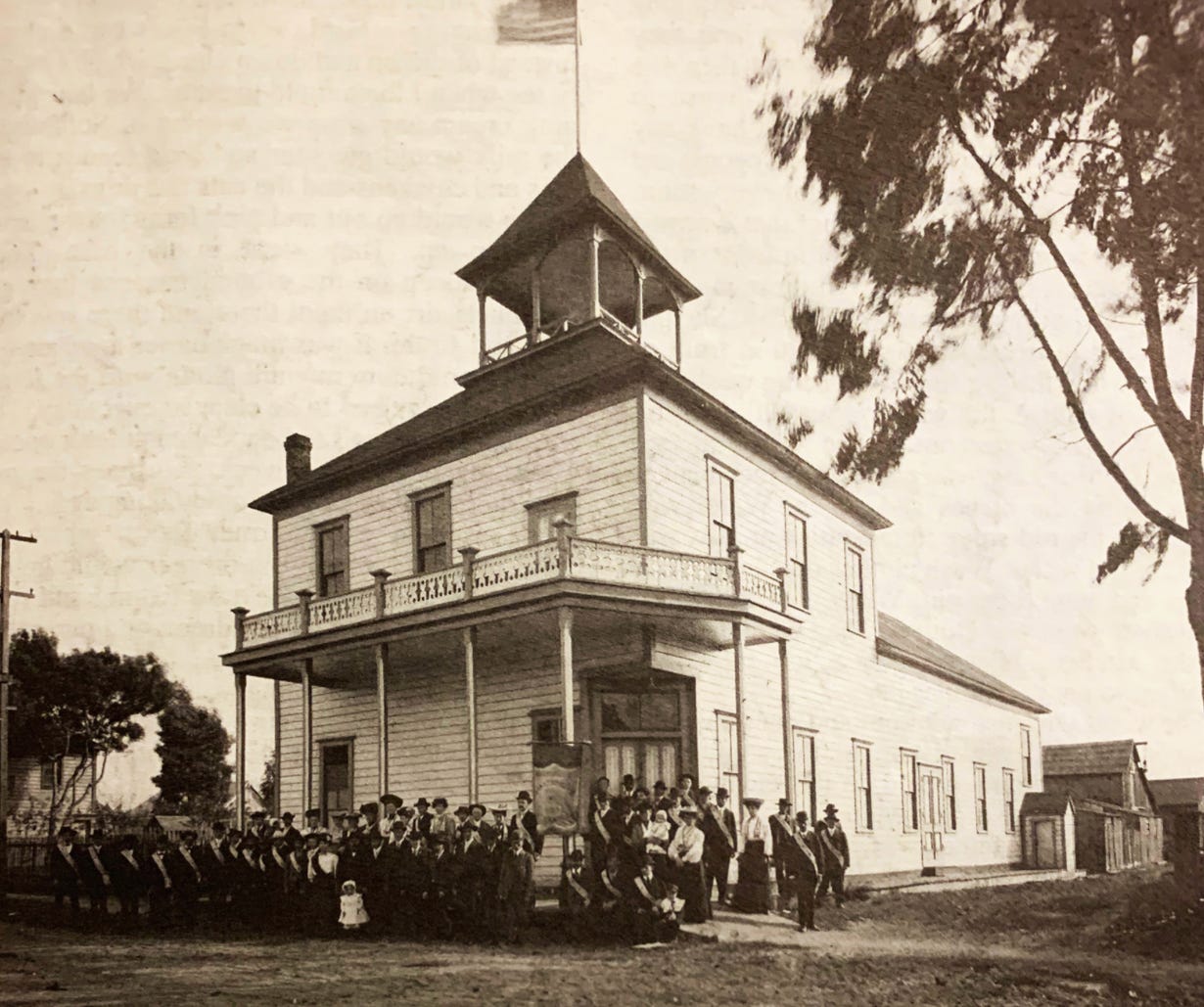
Photo: Fort Bragg Kaleva Hall – 430 Redwood Avenue, in its original architecture and use.
In 1914, Finnish workers also built Toveri Tupa, or Comrades’ Hall, at 210 Corry Street. It became a hub for theater, lectures, and political activism, including voter registration and labor marches. Today, the building is being lovingly restored by its current owners.
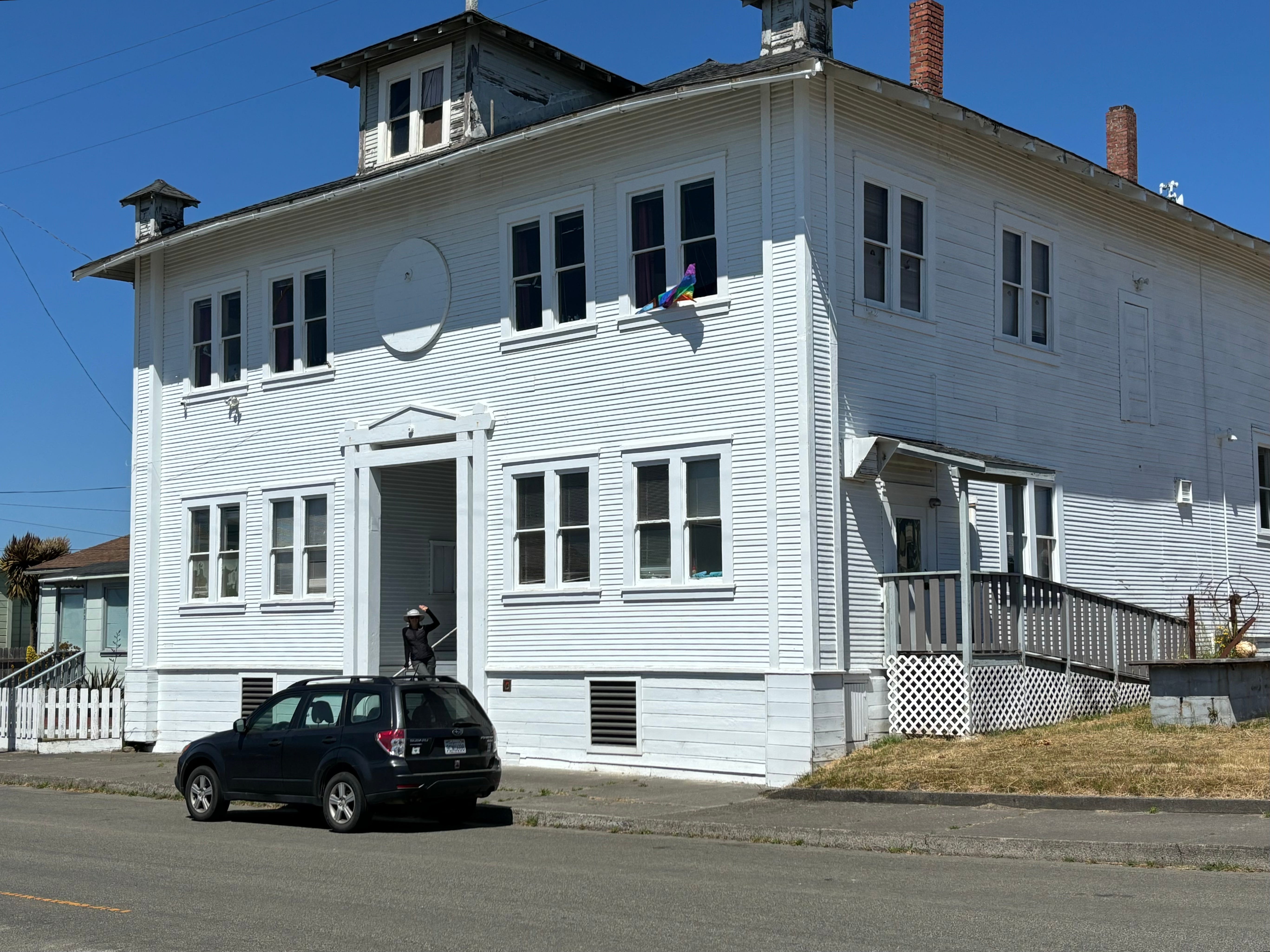
Photo: Toveri Tupa, or Comrades’ Hall, at 210 Corry Street, Fort Bragg.
Everyday Life
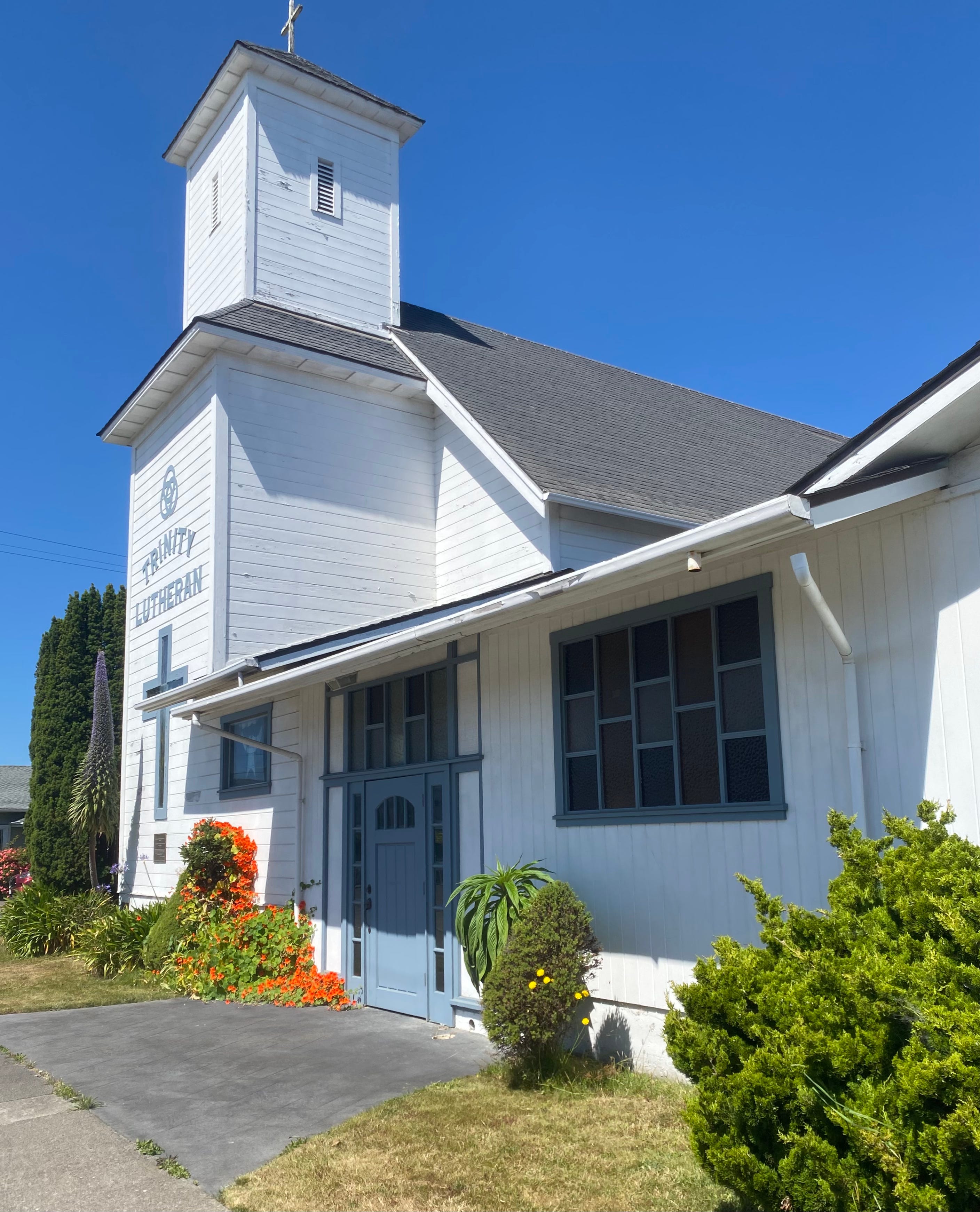
In 1889, immigrants built the Finnish Evangelical Lutheran Church at Redwood Avenue and Corry Street, where it still stands. The local lumber company donated the wood, and $300 was raised to fund construction. Services were first held only in Finnish, later adding English. Pastor Edward Leppäluoto, the last Finnish pastor, served two terms while raising four children with his wife. Today, Finnish Christmas Eve services continue in Fort Bragg, complete with carols sung in Finnish on Christmas Eve
.
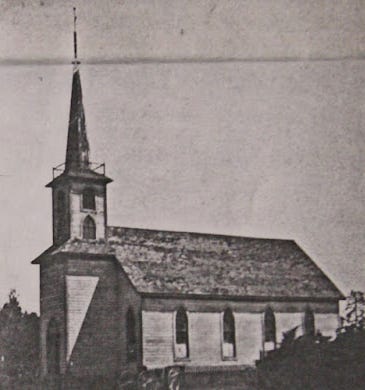
Photos: Finnish Lutheran Church as it was originally built and in its new form.
And then, of course, there was the sauna. Nearly every Finnish home had one, often the very first structure built on raw land. Saunas were not just for bathing but for gathering – neighbors came together on Saturday evenings to sweat, talk, and later enjoy coffee with pulla or beer with sausage. As local Finn and history enthusiast Sylvia Bartley recalls, some families even opened their saunas to the public for a small fee.
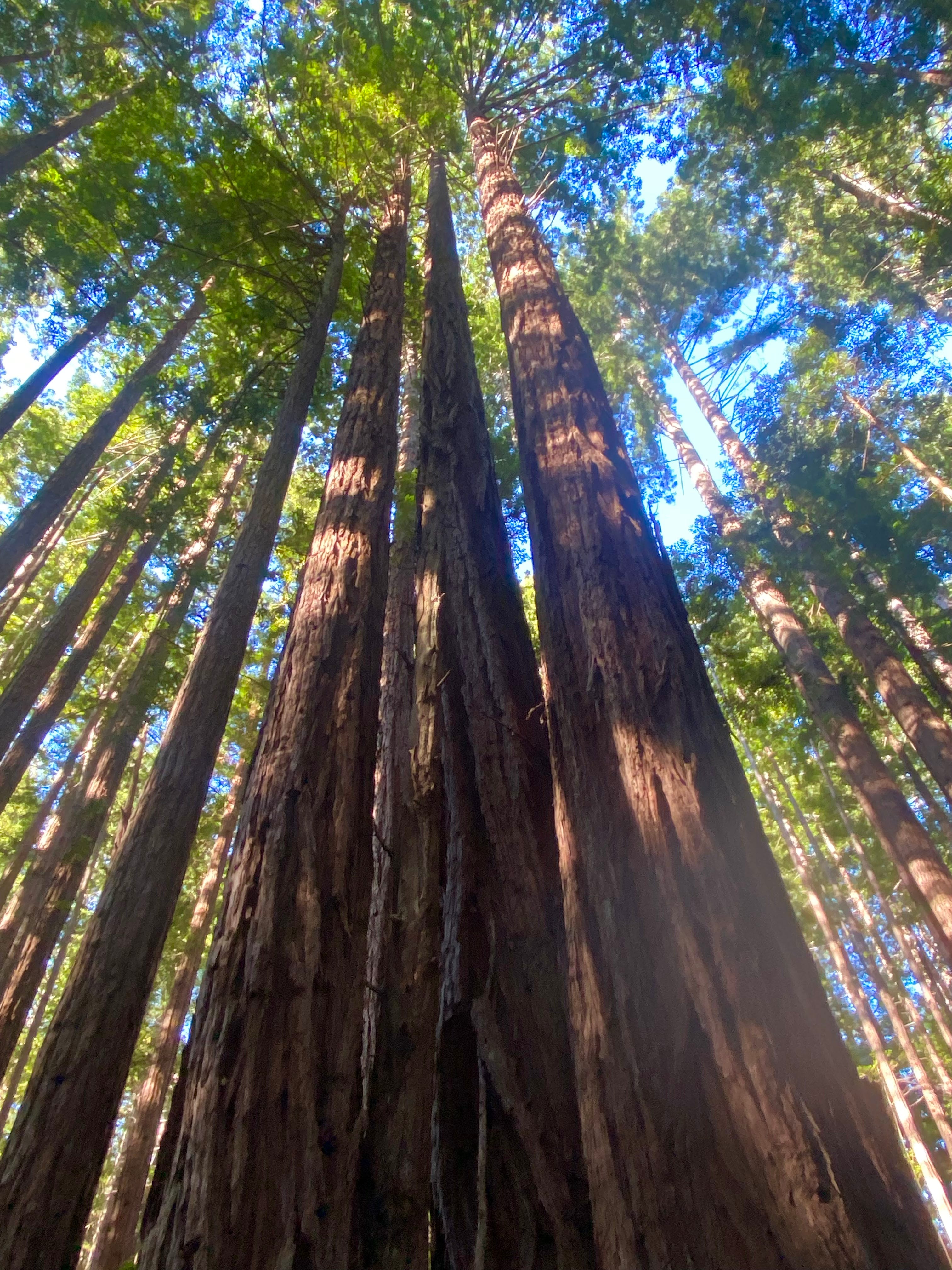
Photo: Redwood Forests gave work to Finnish loggers and lumber mill workers. During the Great Depression the Finns made living of picked huckleberries.
Building for the Future through business
Finnish immigrants didn’t just preserve traditions—they built institutions. In 1923, Fort Bragg’s Finns established the Cooperative Mercantile Corporation, a full-service co-op grocery, butcher, bakery, feed store, and hardware business with 1,000 member-owners. At a time when most co-ops across the United States collapsed, Fort Bragg’s survived the Depression and remained open until 1974.
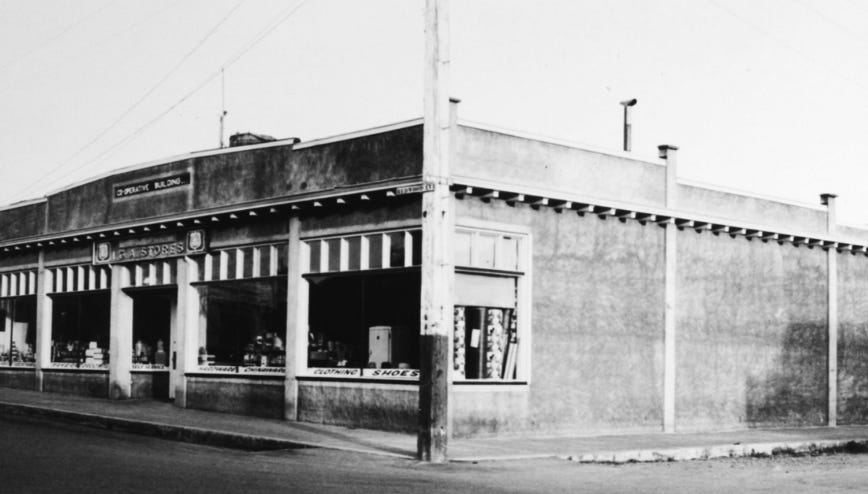
Photo: The Fort Bragg Co-op served until 1974.
A Personal Connection
Now, whenever I sip coffee from those gold-rimmed cups on the cabin porch, the Finnish past here feels even closer. I imagine those early pioneers finishing a Saturday sauna, brewing coffee, and serving sweet pulla—just as we do today.
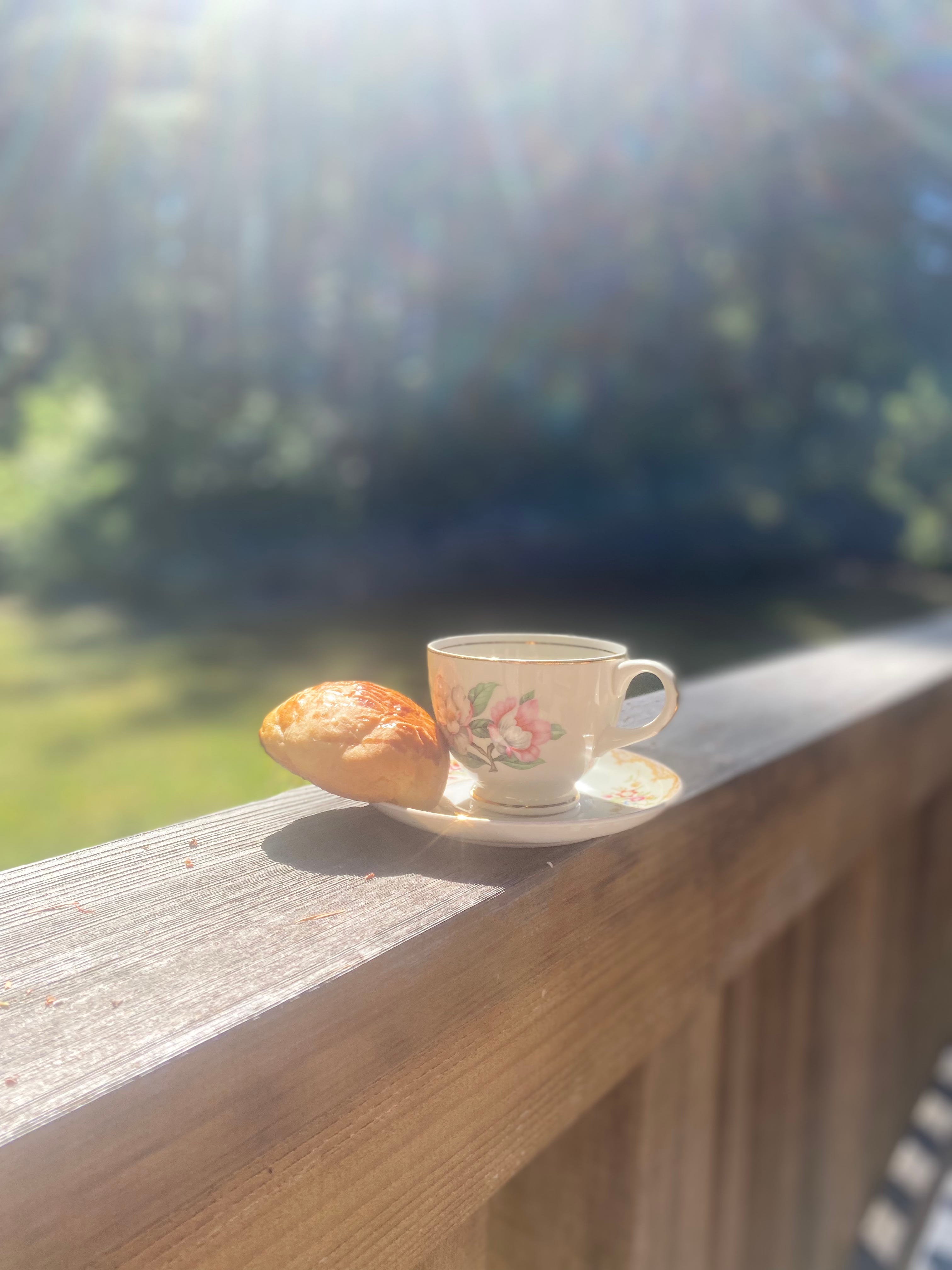
Photo: My morning coffee and freshly baked pulla in our redwood cabin close to Fort Bragg.
Find more about the work of mural artist Lauren Sinnott and her mural:
https://historymural.com/finn/
Find more about the Fort Bragg Alleyway Art project: